
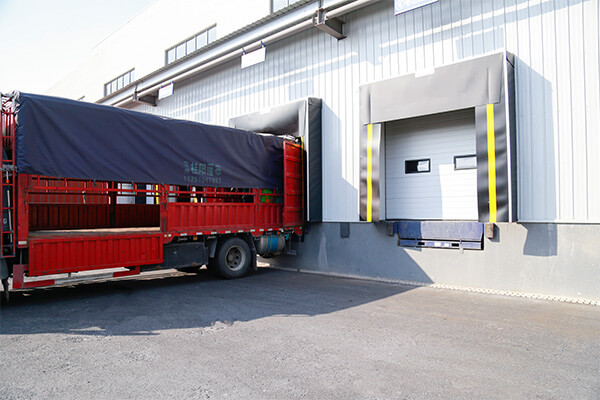

Warehouse Door Types Explained: Which One Is Right for Your Facility?
Warehouse doors are essential for controlling vehicle access, protecting stored goods, and maintaining efficient warehouse operations. Common warehouse door types include high-speed doors, sectional overhead doors, rolling shutter doors, and sliding doors. Each type offers different advantages in opening speed, insulation, security, and space requirements.
For distribution centers, logistics warehouses, and industrial facilities, choosing the right warehouse door depends on traffic frequency, opening dimensions, indoor temperature requirements, and loading dock operations. This guide compares the main types of warehouse doors and explains how to select the right solution for your facility.
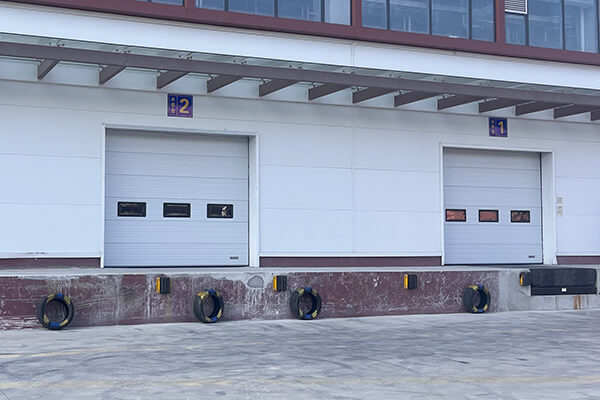
What Are the Main Types of Warehouse Doors?
Choosing the right type of warehouse door can improve operational efficiency and reduce costs. Here are different types of warehouse doors with unique benefits and usage scenarios to help you choose the right door for your warehouse.
High speed warehouse doors
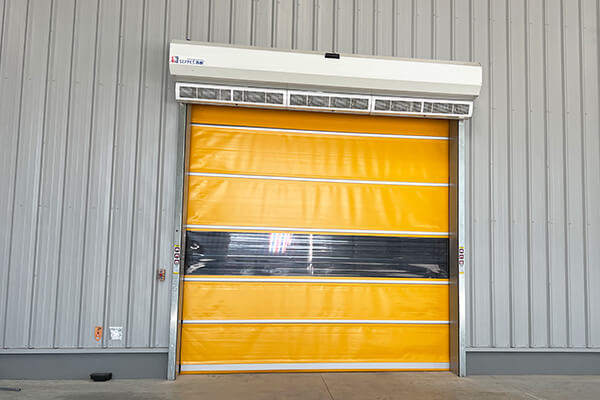
High speed warehouse doors are ideal for industrial and commercial facilities that require frequent access and fast opening and closing of warehouses. In warehousing operations, fast and easy access to goods is the key to ensuring a smooth logistics process. seppes brand high speed roll up doors open at speeds of up to 1.5m/s, can be opened in a very short time and operate reliably throughout the year. Its efficient, safe and reliable performance meets the needs of the logistics and warehousing industry.
Warehouse Sectional doors
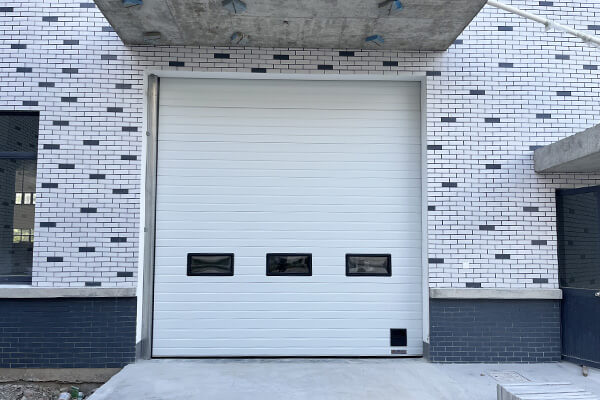
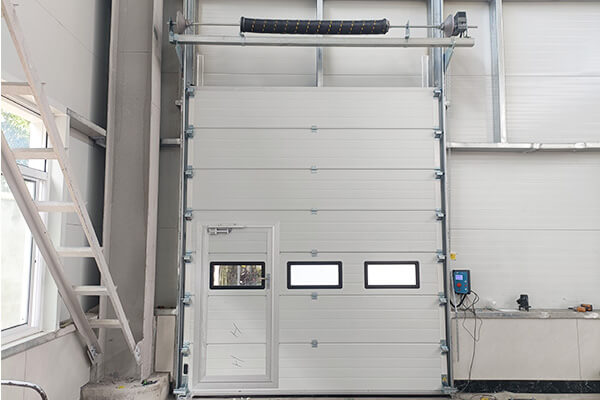
The sectional door is a burglar-proof door for industrial plants, warehouses and loading docks. Commercial sectional doors consist of a number of independent panels, which are raised below the ceiling by means of a slide and spring system. It is different from other industrial doors, such as PVC fast doors and stacking high speed doors, in that it is made of colored steel panels with high thermal insulation polyurethane foam inside, which makes it a very strong anti-theft system, with higher sealing and safety performance.
Advantages
Space-saving: the sectional door slides upward when it opens and does not occupy the space outside or inside the door, suitable for warehouses with limited space.
Thermal insulation: due to the multi-layer structure, sectional door has a good thermal insulation effect and is suitable for temperature-controlled warehouses or cold storage.
High security: the sturdy panel and closure design provides high security against external intrusion.
Applicable Scenarios: Suitable for medium to large warehouses, industrial plants and places that require a high level of security and thermal insulation.
Warehouse roll up doors
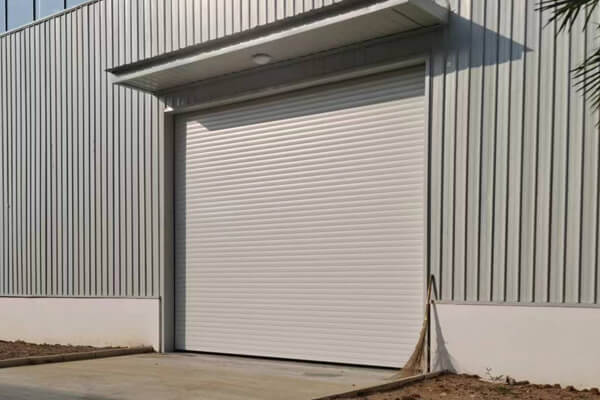
Warehouse roll up doors are one of the most popular warehouse doors for warehouses and other commercial facilities. These doors are made of aluminum alloy or steel with a roll up system to roll up the curtain. They are characterized by low noise, no rust, and high quality aesthetics.
Advantages
Small footprint: since the warehouse door rolls up the curtain, it takes up less space and is suitable for places with limited space.
High adaptability: suitable for different climatic conditions, providing windproof and rainproof functions.
Low maintenance cost: simple structure, easy to maintain and repair
Warehouse sliding doors
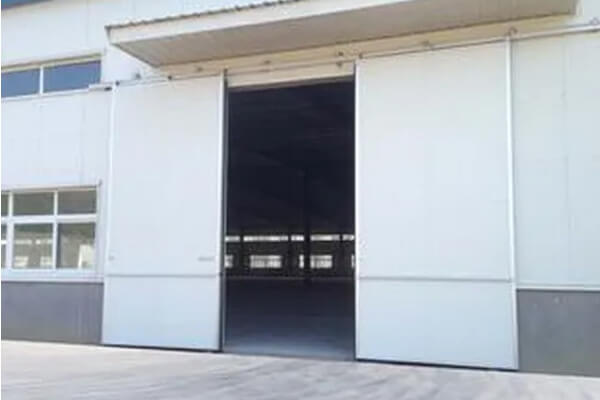
Warehouse sliding doors open by sliding horizontally and are generally composed of a track and roller system. Unlike traditional opening and closing doors, sliding doors are suitable for areas with wider spaces.
Advantages
Suitable for large spaces: sliding doors do not require additional opening and closing space and are suitable for warehouses with large door widths, especially for the access of large goods or equipment.
Sturdy and durable: sliding doors are mostly made of metal, able to withstand heavy loads and are more durable.
Warehouse Loading dock doors
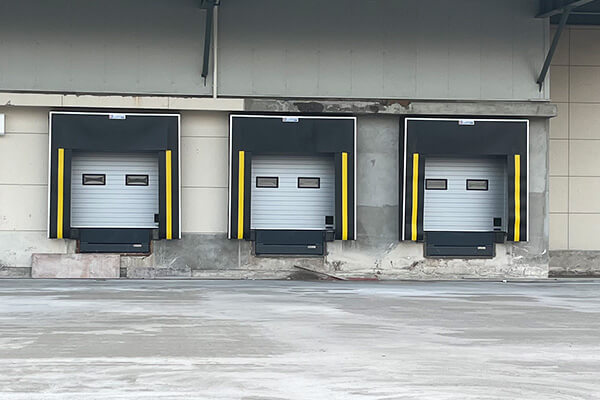
Warehouse dock doors are designed for warehouse loading docks and are often used in conjunction with loading docks to facilitate access to goods. They are usually of sturdy construction and can withstand the impact of heavy loads.
Advantages
Suitable for large spaces: warehouse loading dock doors do not require additional opening and closing spaces and are suitable for warehouses with large door widths, especially for the access of large goods or equipment.
Sturdy and durable: Dock doors are mostly made of metal materials, which can withstand heavy loads and are more durable.
Suitable for high-frequency use: suitable for places that require frequent access, such as high-traffic terminals and logistics centers.
Warehouse Door Types Comparison
The best warehouse door depends on where it is installed and how frequently it operates. The following comparison highlights the main differences between common industrial warehouse door types.
|
Door Type |
Main Advantage |
Best Application |
Main Limitation |
|---|---|---|---|
|
High-Speed Door |
Fast operation, frequent cycling |
Forklift passages, internal warehouse access |
Standard PVC types offer limited physical security |
|
Sectional Overhead Door |
Insulation, durable panels |
Exterior entrances, loading bays |
Requires overhead track space |
|
Rolling Shutter Door |
Compact rolling design, security options |
Storage entrances, exterior openings |
Standard models open relatively slowly |
|
Sliding Door |
Suitable for wide openings |
Large equipment entrances |
Requires lateral clearance |
|
Loading Dock Door |
Designed for loading-bay operations |
Truck loading docks |
Door configuration depends on the loading-bay design |
How to Choose the Right Warehouse Door for Your Facility
Choosing the right warehouse door is the key to optimizing warehouse operations, increasing efficiency and saving energy. The type of warehouse door depends not only on the size of the warehouse, but also closely related to the flow demand, temperature control requirements and other working environment factors.
Selection of door type according to warehouse size
The size of the warehouse has a direct impact on the choice of door. Small warehouses and large warehouses, the difference between the needs of j larger, such as in the flow. The door frequency of use and the required security and functionality.
Small warehouse vs Large warehouse
For small warehouses, doors that open frequently are usually not needed. Warehouse roll-up doors can fulfill the need. These doors are less costly, easy to install, and suitable for low-traffic environments.
Large warehouses usually have a higher traffic demand. The door is also used more frequently, so you need to quickly open and close the door. At this time, warehouse roll up doors and high speed rolling door is a more appropriate choice.
High-traffic areas vs Low-traffic areas
In high-traffic areas, doors need to open quickly and close quickly to avoid traffic delays and unnecessary energy loss. High-speed rolling doors are ideal, as they can open and close quickly and effectively reduce the impact of external temperatures on the internal environment of the warehouse.
For low-traffic areas, where doors are opened less frequently, manual or automatic doors can meet the demand and are usually less costly. Manual roll-up and sliding doors are particularly suitable in these areas.
According to the working environment
The working environment of the warehouse is crucial in choosing the right type of door. Different temperature control needs and environmental conditions determine the functional requirements of the door. The choice should be based on the specific needs of the most appropriate product.
Temperature-controlled warehouses
Temperature-controlled warehouses usually need to maintain a certain temperature range, such as pharmaceutical warehouses, food warehouses and so on. In such environments, the insulating properties of the door are very important. The type of door suitable for temperature-controlled warehouses should have good sealing and insulation to ensure stable internal temperatures and reduce energy consumption.
Refrigerated/freezer warehouses
For refrigerated and frozen warehouses, door sealing and energy efficiency are critical. A quality sealing design ensures that the internal temperature of a temperature-controlled warehouse is not affected by the external environment. Thus reducing energy consumption and ensuring the quality of goods. Refrigerated warehouse doors should be efficiently insulated and sealed to meet the challenges of prolonged cold temperatures.
Best Warehouse Doors for Different Applications
Distribution Centers and Logistics Warehouses
Recommended Doors: Sectional Overhead Doors and High-Speed Roll-Up Doors
Distribution centers and logistics warehouses handle frequent shipments, forklift movements, and continuous goods transfers. Warehouse doors in these facilities must support efficient traffic flow while providing durability and reliable daily operation.
Sectional overhead doors are suitable for exterior warehouse entrances and shipping areas. Their insulated panels help reduce heat transfer when closed, while optional vision windows improve visibility around busy access points.
For internal warehouse passages with frequent vehicle movement, high-speed roll-up doors provide faster opening and closing cycles than conventional industrial doors. When paired with radar sensors or other suitable activation systems, they help reduce waiting times and improve material-handling efficiency.
For large logistics facilities, using sectional doors at exterior openings and high-speed doors along internal traffic routes can provide a practical balance between insulation and operational efficiency.
Warehouse Loading Docks
Recommended Door: Insulated Sectional Overhead Door
Warehouse loading docks require durable doors that can accommodate frequent truck arrivals, loading operations, and changing outdoor conditions.
Insulated sectional overhead doors are commonly used as warehouse loading dock doors because their panel construction provides thermal insulation, and their vertical opening design helps keep the doorway clear during loading and unloading.
For improved loading dock efficiency, sectional doors can be integrated into a complete loading bay system with compatible equipment, including:
-
Hydraulic Dock Levelers: Bridge the height difference between the warehouse floor and truck bed.
-
Dock Shelters or Dock Seals: Help reduce exposure to wind, rain, and outdoor air around compatible parked trailers.
-
Vehicle Restraints: Help prevent unintended trailer movement during loading operations.
The appropriate combination depends on dock dimensions, trailer types, operating conditions, and site safety requirements.
Cold Storage and Temperature-Controlled Warehouses
Recommended Doors: Insulated Sectional Doors and Insulated High-Speed Doors
Cold storage warehouses and temperature-controlled distribution facilities require doors that help limit unwanted air exchange and maintain stable operating conditions.
Insulated sectional doors are suitable for external entrances and loading areas where thermal performance is a priority. Insulated door panels and properly fitted perimeter seals help reduce heat transfer when the doors are closed.
For frequently used internal passages, insulated high-speed doors can reduce the time an opening remains exposed during vehicle movements. Depending on the model, suitable sealing and insulation features can help limit warm-air infiltration and support temperature control.
When selecting cold storage warehouse doors, buyers should consider the operating temperature, temperature difference, traffic frequency, humidity, condensation risks, and installation environment.
For freezer applications, low-temperature-rated components and appropriate anti-icing measures may also be necessary.
High-Traffic Forklift Passages
Recommended Doors: PVC High-Speed Doors and Self-Repairing Zipper High-Speed Doors
Warehouse passages used by forklifts, pallet trucks, and automated material-handling equipment require doors that open quickly and operate reliably throughout the day.
PVC high-speed doors are suitable for busy internal warehouse entrances where fast access and separation between working areas are important. Their rapid opening and closing cycles help reduce waiting times and support continuous material flow.
For routes with a higher risk of accidental impact, self-repairing zipper high-speed doors offer an additional advantage. If the flexible curtain is displaced from its guides during certain impacts, the self-repairing system allows it to return to the guides during a subsequent operating cycle, reducing the need for manual resetting.
Optional radar sensors, safety light curtains, and integration with warehouse automation systems can further improve convenience and traffic management.
For facilities with continuous forklift traffic, high-speed warehouse doors are often a more practical choice than conventional slow-opening doors, particularly where frequent access is the main operating requirement.
Installation and Maintenance Tips for Warehouse Doors
Correct installation
Correct installation is carried out according to the drawings in order to avoid installation errors. It also ensures optimal performance of the door, increasing its energy efficiency and longevity.
Routine maintenance
Regular maintenance is essential to ensure that your warehouse doors remain operational. Lubricate moving parts, check seals for wear, and inspect sensors or automated systems regularly to prevent downtime.
Troubleshooting common Issues
Common issues include broken springs, malfunctioning sensors, or door misalignment. Regular inspection and timely repairs will reduce costly emergency fixes and keep operations running smoothly.
Conclusion
Choosing the right warehouse door is a critical decision that affects efficiency, security, and energy costs. By considering factors such as traffic volume, energy efficiency, environmental conditions, and security, you can select the ideal door for your facility. Whether you need high-speed roll-up doors for quick access or sectional doors for better insulation. The right warehouse door can significantly improve your operations.
FAQs
What are the most common types of warehouse doors?
The most common warehouse doors include sectional overhead doors, rolling shutter doors, high-speed doors, and sliding doors. Sectional doors are widely used for loading bays, while high-speed doors are suitable for frequent forklift traffic. Rolling shutter doors provide compact opening systems, and sliding doors can accommodate large industrial openings.
What is the difference between a warehouse roll-up door and a sectional door?
A warehouse roll-up door typically uses interlocking metal slats that coil above the opening, making it suitable for areas with limited overhead space. A sectional door uses hinged insulated panels that travel along ceiling tracks, offering effective insulation and durability for warehouse entrances and loading docks.
What type of door is best for a warehouse loading dock?
Sectional overhead doors are commonly used at warehouse loading docks because they provide durable access and can be combined with dock levelers and dock shelters. The best configuration depends on the loading-bay dimensions, insulation requirements, vehicle traffic, and available installation space.

