
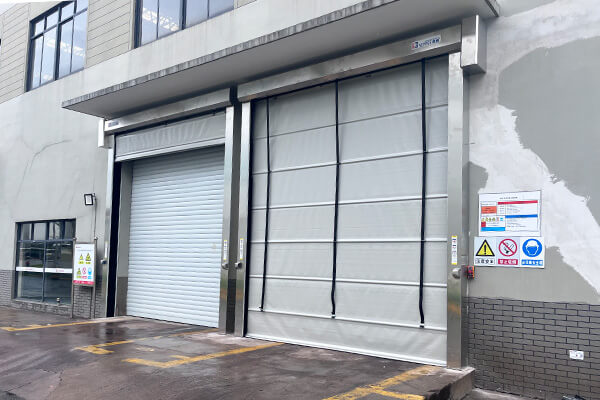

Why Food Waste Recycling Plants Need Stainless Steel High Speed Folding Doors: The Ultimate Anti-Corrosion Solution
In the demanding environment of a food waste recycling plant, the exterior doors handle frequent vehicle movement, outdoor weather, moisture, odors, and a corrosive working environment. When standard industrial doors begin to rust, lose sealing performance, or require repeated maintenance, the entire facility can face higher operating costs and reduced efficiency.
This is why a high speed folding door with stainless steel frame has become a practical solution for harsh waste treatment environments. In this article, we will explore why stainless steel high speed folding doors are suitable for food waste recycling plants, what benefits they provide, and how to choose the right configuration for exterior industrial openings.
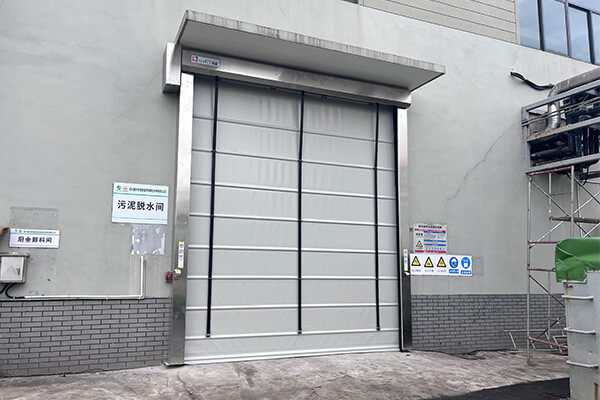
What Is a High Speed Folding Door?
High speed folding doors are an industrial rapid door designed for fast, frequent, and reliable opening in demanding working environments. Instead of rolling the curtain around a barrel like a standard roller shutter door, the door curtain folds or stacks upward during opening. This design makes it suitable for large exterior openings, busy vehicle passages, and industrial areas where wind resistance and operating speed are both important.
For facilities such as food waste recycling plants, logistics centers, manufacturing workshops, and waste treatment areas. High speed fold-up doors help improve traffic efficiency, while reducing the time that the doorway remains open. This can support better environmental control, especially in areas exposed to wind, dust, moisture, or outdoor weather.
How the Folding / Stacking Structure Works
Horizontal reinforcement bars support the folding or stacking system across the door curtain. When the door opens, the curtain moves upward and folds section by section above the opening. When the door closes, the curtain lowers quickly and forms a secure barrier across the entrance. The horizontal reinforcement bars improve curtain strength and help the door withstand wind loads, making the high speed stacking door a practical solution for exterior passages.
Compared with a conventional roller shutter door, the folding fast door offers faster access, better suitability for large openings, and improved performance in areas where wind resistance is required. For industrial facilities that need both speed and durability, this door type provides a reliable balance between efficiency, safety, and long-term operation.
| Comparison Point | Conventional Roller Shutter Door | High Speed Folding Door for Food Waste Recycling Plant |
|---|---|---|
| Opening Speed | Opens and closes relatively slowly, which may keep the doorway exposed for longer. | Opens and closes quickly, helping reduce waiting time for trucks, forklifts, and waste transfer vehicles. |
| Suitable Application | More suitable for low-frequency access areas or general industrial openings. | Better suited for high-traffic exterior openings in food waste recycling plants. |
| Corrosion Resistance | Standard painted steel parts may rust faster in humid and corrosive environments. | Can be equipped with a stainless steel frame to improve corrosion resistance and long-term durability. |
| Odor Control | Slower operation may allow more odours to escape from the facility. | Fast closing helps reduce the time the opening remains exposed, supporting better odour control. |
| Wind Resistance | May have limited stability on large exterior openings under strong wind conditions. | The folding curtain with horizontal reinforcement bars provides better wind resistance for outdoor use. |
| Maintenance Cost | Rust, wear, and slow operation may increase maintenance frequency over time. | Stainless steel structure and heavy-duty design help reduce long-term maintenance in harsh environments. |
| Door Size Flexibility | May not be ideal for large openings with frequent vehicle movement. | Suitable for wider and taller industrial openings, especially where trucks and forklifts pass frequently. |
| Environmental Control | Longer opening time can increase air exchange, dust entry, and odour leakage. | Helps improve environmental control by reducing air exchange between indoor and outdoor areas. |
| Long-Term Value | Lower initial cost, but may require more maintenance in corrosive waste treatment environments. | Higher initial investment, but better suited for food waste recycling plants that require durability, speed, and corrosion resistance. |
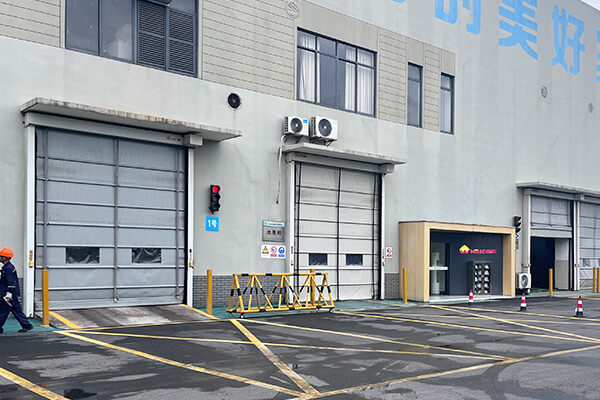
Why Stainless Steel Frame Matters in Food Waste Recycling Plants
In a food waste recycling environment, standard is never enough. The presence of organic acids, high humidity, and cleaning chemicals creates a cocktail for rapid oxidation. This is where the structural integrity of SUS304 stainless steel becomes a non-negotiable asset for your high-speed folding doors.
Better Corrosion Resistance for Humid and Aggressive Environments
SUS304 stainless steel is engineered for stability. It can withstand humid air, cleaning water, waste treatment conditions, and corrosive gases more effectively than a conventional painted steel structure. This helps the door maintain reliable operation even when exposed to moisture and aggressive industrial conditions every day.
Longer Service Life Compared with Standard Painted Steel Frames
The stainless steel high speed folding door helps reduce this risk. The frame is more resistant to rust, easier to clean, and better suited for long-term exposure to outdoor weather and waste treatment conditions. This makes it a more reliable option for exterior openings in food waste recycling plants.
From a long-term ROI perspective, stainless steel can help reduce maintenance frequency, improve appearance retention, and support stabler door operation. For facilities that require continuous production, frequent truck access, and lower downtime, investing in a stainless steel frame can be more cost-effective over the full service life of the door.
Key Features of Our Stacking Rapid Doors for Waste Facilities
Designed specifically for the rigorous demands of the waste management industry. High speed stacking doors need to handle frequent vehicle movement, outdoor wind pressure, moisture, odours, and corrosive working conditions.
Fast Opening and Closing for Frequent Vehicle Traffic
Food waste recycling plants usually have frequent traffic from waste collection trucks, forklifts, transfer vehicles, and maintenance equipment. If the door opens slowly, vehicles may need to wait longer at the entrance, which can affect site efficiency and create congestion around the exterior opening.
- Rapid Cycling: With opening speeds ranging from 0.8 to 1.5 m/s, our doors minimize the duration of “open-air” exposure.
- Operational Flow: Fast action ensures that waste transport vehicles can move in and out without stopping, significantly reducing congestion at the perimeter during peak hours.
Improved Odor Control Around Exterior Openings
Odour control is an important concern in food waste recycling plants. When an exterior doorway remains open for too long, odours from organic waste processing areas may spread to the surrounding environment. Managing a food waste plant requires strict control over air quality and emissions. Our doors feature high-performance reinforced seals that provide an airtight barrier when closed.
Wind Resistance for Outdoor Installation
Exterior openings in food waste recycling plants are often exposed to wind, rain, and changing weather conditions. For large door openings, wind pressure can affect door stability if the structure is not strong enough. A high speed fold-up door is designed with horizontal reinforcement bars or wind-resistant ribs across the curtain. These components help strengthen the door curtain and improve stability during operation.
Compared with a standard roll-up door, the stacking design provides stronger support for wider and taller openings. It is especially practical for factory exterior doors, truck passages, and waste transfer areas exposed to outdoor conditions.
Reduced Maintenance in Corrosive Environments
The original door structure needed better durability in a humid and corrosive exterior environment, so the door frame and key exposed structural parts were upgraded to stainless steel. By reducing the risk of frame corrosion, a stainless steel high speed stacking door can help lower maintenance frequency, improve service life, and reduce downtime. For exterior openings that operate every day, this creates better long-term value than a standard painted steel door.
Tailored Retrofit and Customization
Many food waste plants face the challenge of upgrading older infrastructure. We specialize in replacement projects, providing bespoke solutions that perfectly fit existing structural openings.
- Custom Dimensions: Whether you are dealing with extra-wide vehicle bays or restricted overhead clearance, our frames are custom-manufactured to your specific site requirements.
- Flexible Integration: Our control systems can be integrated with existing facility management software, loop detectors, or remote-access from your old, corroded doors to a modern stainless steel system.
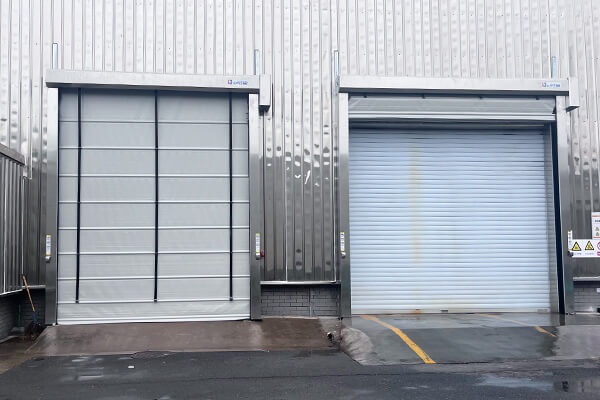
Case Study: Upgrading Exterior Door for Food Waste Plant’s Perimeter Openings
Project Background
The customer operates a food waste recycling plant, where exterior doors are exposed to demanding working conditions every day. Moisture, organic waste, waste gas, cleaning water, and outdoor weather can all accelerate corrosion, especially around door frames and exposed metal parts.
The original door system required better resistance to rust and environmental damage. To solve this issue, the new food waste recycling plant door was designed with a stainless steel frame and a high speed folding structure. This configuration helps the door perform more reliably in an exterior opening, while supporting frequent access for trucks, forklifts, and waste transfer vehicles.
For this type of facility, the door is not only used for opening and closing. It also plays an important role in traffic efficiency, odor control, wind resistance, and long-term site management.
Door Configuration
| Item | Specification |
|---|---|
| Product | High Speed Folding Door |
| Door Type | High Speed Stacking Door / Fold-Up Rapid Door |
| Frame Material | Stainless Steel |
| Application | Exterior opening of a food waste recycling plant |
| Main Requirement | Corrosion resistance |
| Main Functions | Fast access, sealing, wind resistance, odor control |
| Suitable Environment | Humid, corrosive, outdoor, and high-traffic industrial areas |
| Related Application | Waste recycling facility door, food waste recycling plant door |
Why This Solution Was Selected
This project was not a simple door replacement. It was a customized industrial door solution based on the working environment of a food waste recycling plant. The exterior opening needed to meet several requirements at the same time: corrosion resistance, fast vehicle access, wind resistance, sealing performance, and long-term stable operation.
- A conventional industrial door may be suitable for general warehouse use, but it may not provide enough durability in a food waste recycling environment. In this project, the customer paid special attention to corrosion resistance, so stainless steel was used for the frame and key exposed structural parts.
- The high speed folding door was selected because it can open and close quickly, helping reduce waiting time for vehicles and limiting the time the doorway remains open. Its reinforced folding structure also makes it more suitable for outdoor openings and larger industrial passages.
For a waste recycling facility door, long-term performance is just as important as daily operating speed.
PVC High Speed Stacking Door vs Standard Industrial Door
Cycle Speed & Odour Containment
Conventional industrial doors typically operate at slow speeds, leaving large apertures exposed for extended periods. In a waste processing context, every second the door remains open allows:
- Odour Escape: Fugitive emissions can lead to local authority complaints and environmental fines.
- Contaminant Exchange: Moisture and dust are free to move between zones.
The Folding Door Advantage: With opening speeds of up to 1.5 m/s, high-speed folding doors facilitate “Just-in-Time” access for trucks and forklifts. By drastically reducing the open-air duration, these doors act as a dynamic seal, maintaining internal air pressure and significantly improving odour containment.
Corrosion Resistance: SUS304 vs. Coated Carbon Steel
Standard doors often utilise powder-coated or galvanised carbon steel. In the presence of organic acids and constant wash-downs, these coatings inevitably chip or delaminate, leading to rapid structural oxidation (rust).
The Folding Door Advantage: By upgrading to a SUS304 stainless steel frame, the door becomes virtually immune to the corrosive “cocktail” found in food waste plants. Stainless steel does not rely on a surface coating for protection; its resistance is inherent throughout the material, ensuring the frame remains hygienic, structurally sound, and audit-ready for years to come.
Wind Load and Structural Stability
Standard PVC roll-up doors often struggle with “curtain blow-out” when installed on external perimeters subject to high wind pressure or internal vacuum pressures.
The Folding Door Advantage: Also known as High-Speed Stacking Doors, these units feature horizontal reinforcement bars integrated into the curtain. This “stacking” mechanism allows the door to withstand significant wind loads (Class 3 or higher), making them the ideal choice for large exterior openings where weather resistance and security are paramount.
4. Long-Term Maintenance & TCO (Total Cost of Ownership)
While standard doors offer a lower initial capital expenditure (CAPEX), their operational expenditure (OPEX) in a waste facility is often unsustainable. Frequent repairs to rusted tracks, motor strain from slow cycles, and energy loss quickly erode any initial savings.
The Folding Door Advantage: A stainless steel high-speed folding door represents a strategic investment in operational continuity.
- Reduced Downtime: High-durability components mean fewer emergency repairs.
- Extended Lifespan: Stainless steel frames outlast coated steel by a factor of 3 to 1 in corrosive environments.
- Energy Efficiency: Faster cycles mean better climate control and lower energy costs.
Comparison Summary: At a Glance
| Feature | Standard Industrial Door | Stainless Steel Folding Door |
| Opening Speed | Slow (0.1 – 0.2 m/s) | Rapid (0.8 – 1.5 m/s) |
| Corrosion Resistance | Low (Susceptible to acid/rust) | Exceptional (Acid-resistant SUS304) |
| Wind Resistance | Limited | High (Reinforced stacking design) |
| Odor Control | Poor | Excellent |
| Best For | General Warehousing | Waste Recycling & Aggressive Environments |
Conclusion: Invest in Longevity and Reliability
In the food waste recycling, your facility’s infrastructure is a direct reflection of your operational efficiency. Upgrading to a stainless steel high-speed folding door is more than just a purchase—it is a strategic investment in the longevity of your plant.
FAQs
How do high-speed doors assist in odor control for waste facilities?
A: Odor control relies on maintaining internal air pressure and minimizing the time a doorway is open. With opening/closing speeds of up to 1.5m/s, our high-speed doors reduce the air exchange window, while high-performance seals prevent fugitive emissions from escaping when the door is closed.
High-Speed Door: What is a high speed folding door and how does it differ from roll up doors?
A high speed folding door, sometimes called high-speed door or speed door, uses a compact overhead stacking design with reinforced PVC fabric or pressure-resistant curtain panels that fold or roll rapidly. Unlike traditional roll up doors, high speed fold up doors fold into a compact stack, providing space-saving operation and faster opening and closing cycles. They are ideal for industrial applications such as loading dock and hangar access, offering quicker and more efficient traffic flow while maintaining strong wind resistance and seamless access.
High-Speed Folding Doors: What are the main benefits of installing speed doors in industrial environments?
Speed doors offer several benefits for demanding industrial and modern industrial workflows: they quickly and efficiently manage traffic flow, improve workflow at loading bays, and reduce heating or cooling loss by minimizing open-door time. Their compact overhead stacking design saves space compared with sectional doors, and high-performance folding systems tolerate intensive use with high opening and closing cycles. This results in better uptime and safer, seamless access for personnel and forklifts.
How do folding doors for industrial use handle heavy usage and strong wind resistance?
Doors for industrial use are engineered with reinforced pvc, pressure-resistant curtain materials, and robust frames to withstand heavy usage and strong wind resistance. Fast action doors include features like flexible curtain reinforcements, secure locking systems, and sensors for safe passage. For environments with frequent opening and closing cycles—such as busy loading docks—these designs maintain performance and longevity, reducing maintenance intervals and supporting intensive use.
High-Performance Folding: How are these doors maintained and what is the expected uptime?
Regular maintenance for high-performance folding doors includes checking the pvc fabric for wear, inspecting guides, lubricating moving parts, and testing safety sensors and emergency opening systems. With planned maintenance, reinforced components and designs for intensive use deliver high uptime and reliable opening/closing cycles. Many manufacturers offer service contracts to ensure doors used in industrial environments remain operational and minimize downtime at loading bays and docks.
Roll-Up: Can speed doors replace sectional doors or traditional roll up doors at loading docks?
Yes, high speed folding doors and some roll-up alternatives can replace sectional doors for many loading dock applications. They provide faster operation, reduced short opening times, and a more compact footprint than sectional doors. For loading bays that demand seamless access and rapid movement of goods, these doors improve workflow, support continuous traffic flow, and are ideal for industry and manufacturing operations where speed and thermal control (e.g., cold storage) are priorities.
What customization options exist for doors for industrial use to match operating conditions?
Manufacturers offer many customization options for doors for industrial use, including size, insulation level to insulate cold storage, reinforced pvc curtains, vision panels, fast action openers, and control systems that integrate with facility workflow and loading dock management. Options for pressure-resistant curtain material, strong wind resistance, and emergency opening features let facilities tailor doors to demanding industrial conditions, intensive use, and specific traffic flow needs while saving overhead space with a compact overhead stacking design.

