

High-Speed Doors for Pharmaceutical Cleanrooms: Applications and Solutions
A high speed door solution for a pharmaceutical cleanroom starts with the route it serves. Doors can shorten the time an opening stays exposed during frequent transfers. Use the facility’s zoning, HVAC and cleaning procedures to specify each opening.
Use this guide to plan applications, controls and installation details. For procurement, see cleanroom door products and configurations.
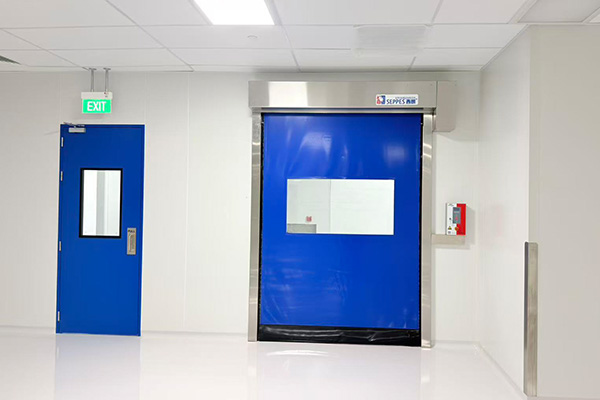
5 Applications for a High Speed Door Solution in Pharmaceutical Cleanrooms
Start by mapping the route and identifying what the opening needs to separate. The table lists candidate configurations to review against each operation.
| Application | Primary requirement | Configuration to assess |
|---|---|---|
| Cleanroom corridors | Frequent movement of people and material carts | Consider a high-speed zipper door with activation and detection matched to the route |
| Pharmaceutical production rooms | Cleaning access and sealing at a controlled boundary | Confirm surface finishes, guide access and the required sealing arrangement |
| Packaging workshops | Repeated cycles at material transfer points | Check opening time, activation range and peak duty cycle |
| Laboratory access points | Controlled entry and a mix of pedestrian or trolley traffic | Check access controls and confirm whether high-speed operation is appropriate |
| Material transfer areas | Sequenced entry and exit between controlled zones | Review interlocking and emergency release with the facility team |
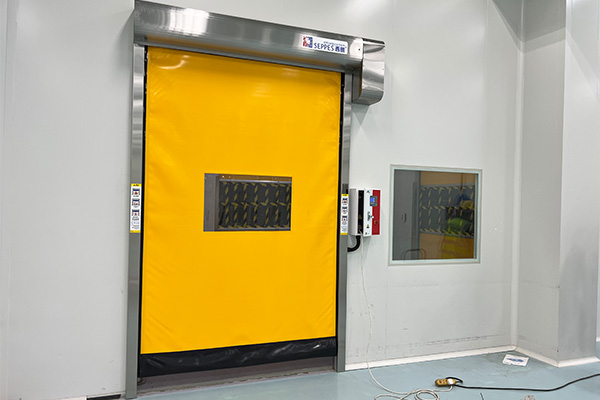
Technical Features for Pharmaceutical Cleanroom Applications
2.5mm Anti-Static Door Curtain
A 2.5 mm anti-static curtain was used in the project configuration below. It is an option to evaluate where material handling or sensitive equipment makes static control relevant. Confirm the required performance, cleaning-agent compatibility and expected duty cycle for the specific opening. Assess the curtain and its installation against the facility’s static-control requirements and qualification plan.
Three Pairs of Photoelectric Safety Sensors
Three pairs of photoelectric sensors were used for the project below. Multiple detection levels can help account for pedestrians, low carts and taller loads sharing the same opening. Map their paths and approach directions before choosing sensor height and placement. Confirm the required detection coverage and verify it with representative traffic during commissioning.
Screw-Free Front Design
A screw-free front reduces exposed fixing points on the face of the enclosure. This can simplify wiping around the frame in corridors and production areas. During review, check how the front cover, side guides and seals can be accessed for cleaning and inspection, and confirm that the enclosure can be serviced without blocking the normal material route.
Embedded Control Box with No Protrusion
A recessed control box can keep the controls out of a narrow circulation route and reduce obstructions near carts. Confirm wall depth, mounting details, cable access and how the surrounding surface will be finished. Coordinate these details with the facility team before installation, including how technicians can open the enclosure and how operators will reach the controls.
For routes where accidental curtain contact is a concern, see self-repairing zipper doors for cleanroom applications and confirm the reset procedure for the model.
Pharmaceutical Cleanroom Door Project: Technical Configuration
Project Background
The project was supplied for a pharmaceutical manufacturing facility. The door configuration focused on clean installation, safer access and better compatibility with pharmaceutical cleanroom requirements.
Main Challenges
The main challenges were typical of pharmaceutical cleanroom applications. Operators and material trolleys needed to move efficiently between areas, but conventional door systems could increase opening time, disturb airflow and create potential dust accumulation points. The project also required a cleaner installation appearance, safer doorway protection and a control system that would not protrude into the working area.
Door Configuration
The facility used a high speed door solution configured for the circulation and cleaning requirements described above. The project configuration included:
| Configuration | Benefits for Pharmaceutical Applications |
|---|---|
| 2.5mm anti-static curtain | Helps reduce static-related risks in sensitive production areas and supports controlled environments |
| High-speed opening and closing operation | Minimizes door open time, improves material flow efficiency and reduces unnecessary airflow exchange |
| Three pairs of photoelectric sensors | Provides wider detection coverage for operators, carts and material movement, improving operational safety |
| Screw-free front enclosure design | Creates a smoother surface with fewer dust accumulation points and simplifies cleaning |
| Embedded wall-mounted control box | Keeps the installation surface flat without external protrusions, optimizing cleanroom space utilization |
The anti-static curtain helps support static-sensitive pharmaceutical production environments, while the rapid opening and closing cycle improves workflow efficiency for operators and material transportation.
The advanced safety sensor system enhances protection during frequent traffic, while the screw-free structure and embedded control design provide a cleaner appearance that meets the expectations of modern pharmaceutical facilities.
How to Specify a High-Speed Door for Pharmaceutical Areas
Cleanroom Classification and Environmental Conditions
Record the designated room classification, cleaning procedure and pressure relationship at the opening. Agree on what performance the site team will verify after installation. For U.S. aseptic processing projects, see the FDA guidance on sterile drug products produced by aseptic processing for context on facility design and environmental controls.
Door Opening Size and Traffic Frequency
Measure clear width and height, the largest loaded trolley and approach clearances. Record peak cycles and whether personnel or vehicles share the route.
Curtain Material and Static Control
Specify the desired surface properties and compatible cleaning agents. Where static control matters, define the performance criterion and how it will be verified.
Safety Sensors and Interlocking Requirements
Map traffic and detection zones, identify doors that must be sequenced and confirm the normal and emergency operating logic with the facility team.
Installation Space and Control Box Position
Confirm wall depth, mounting space, cable routes and access for cleaning and maintenance. Mark the control box position on the opening drawing.
Conclusion: Improving Pharmaceutical Cleanroom Access
Specify each opening around the routes, cleaning procedures and environmental boundaries it serves. Review the proposed controls and verify the installed opening during facility commissioning.
Frequently Asked Questions About Pharmaceutical High-Speed Doors
What is the difference between a standard high speed door and a pharmaceutical high-speed door?
A standard high speed door is mainly designed for industrial traffic efficiency. A pharmaceutical high-speed door usually requires cleaner surfaces, better sealing, anti-static curtain materials, safer sensor systems and installation details that support cleaning and controlled environments.
How do high-speed zipper doors help maintain cleanroom pressure?
High-speed zipper doors use a zipper-guided curtain system to improve side sealing and reduce uncontrolled air exchange. Their rapid opening and closing also limit the time an entrance remains exposed. These features can support pressure-controlled pharmaceutical cleanrooms, although actual performance depends on the door design, installation, and HVAC system.
Can pharmaceutical high-speed doors integrate with interlocking systems?
Yes. Pharmaceutical high-speed doors can be configured with interlocking controls for cleanroom airlocks and material transfer areas. Depending on the control design, the system can prevent two connected doors from opening simultaneously, helping maintain environmental separation. Touchless sensors and access control systems can also be integrated where required.
What are the benefits of an embedded control box?
An embedded wall-mounted control box keeps the control system flush with the wall. This avoids external protrusion, reduces obstruction in clean corridors and supports easier cleaning around the doorway.
What safety features are available for pharmaceutical high-speed doors?
Pharmaceutical high-speed doors can incorporate photoelectric safety sensors, obstacle detection, and automatic control systems to support safe operation. Certain zipper door models also feature self-repairing curtains that can return to their guides after an accidental impact, helping reduce operational interruptions and maintenance requirements.
How should pharmaceutical high-speed doors be cleaned and maintained?
Regular maintenance should include inspecting PVC curtains, zipper guides, seals, safety sensors, and control systems. Cleaning should follow the facility’s approved procedures using agents compatible with the door materials. Periodic functional checks help maintain reliable operation, consistent sealing performance, and safe access in pharmaceutical manufacturing environments.
