

High-Speed Machine Protection Doors for Robotic Cutting Equipment: A Safe and Efficient Solution for Automotive and Electronics Manufacturing
In automated manufacturing environments, robotic cutting equipment requires reliable safety separation, fast access control, and smooth process integration. High-speed machine protection doors are designed to isolate hazardous machine operations while supporting short cycle times, making them an ideal solution for automotive and electronics manufacturing.
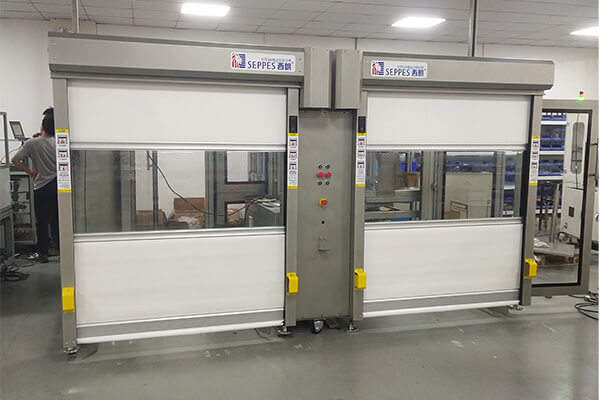
What Are High-Speed Machine Protection Doors?
High-Speed Machine Protection Doors are fast-operating industrial safety doors designed for automated machines, robotic workstations, cutting systems, welding cells, and assembly lines. Unlike standard industrial doors used mainly for access or area separation, these doors are installed directly around machine zones where safety, speed, and process control are all required.
In modern automotive and electronics manufacturing, production equipment often operates with high-speed robot arms, cutting tools, moving components, sparks, dust, or flying debris. High-Speed Machine Protection Doors help separate operators from hazardous automated processes while allowing fast and controlled access when loading, unloading, maintenance, or inspection is required.
High-Speed PVC Doors vs. Standard Industrial Doors in Automated Machine Applications
| Comparison Item | High-Speed Doors | Standard Industrial Doors |
|---|---|---|
| Opening Speed | Fast opening and closing, suitable for short machine cycles. | Slower operation, not ideal for frequent access. |
| Production Efficiency | Helps reduce waiting time and supports continuous automated production. | May cause delays in high-frequency machine operations. |
| Machine Integration | Can connect with PLC, sensors, safety switches, and interlock systems. | Usually designed for basic access control, with limited integration. |
| Operator Safety | Helps isolate robotic arms, cutting tools, and moving machine parts. | Provides general separation but may not support automated safety logic. |
| Space Flexibility | Compact design, suitable for robotic cells and limited installation space. | Often requires more installation or operating space. |
| Application Scenario | Ideal for robotic cutting equipment, welding cells, assembly lines, and automated machines. | More suitable for warehouses, workshops, and general industrial entrances. |
| Cycle Frequency | Designed for frequent opening and closing in automated production. | Not always suitable for high-cycle machine environments. |
| Process Control | Supports safer and smoother interaction between people and machines. | Mainly used as a physical barrier or access door. |
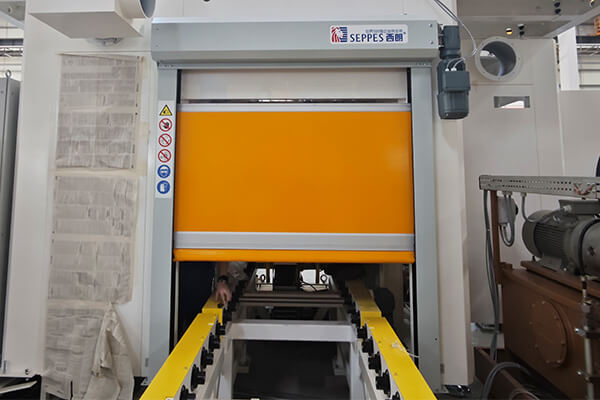
Why Robotic Cutting Equipment Requires Machine Protection Doors
Safety Risks in Robotic Cutting Applications
Robotic cutting equipment works continuously and at high speed. During operation, robot arms may move quickly in multiple directions, while cutting tools can generate sparks, dust, chips, and debris. materials. An Automated Machine Safety Door helps control access to the robotic cutting zone. When the machine is running, the door can remain closed to separate workers from dangerous operations. When access is required, the door can only open under controlled conditions.
Industrial Safety Doors for Robotic Equipment can also work with machine signals, PLC systems, sensors, and safety interlocks. This allows the door and robotic equipment to operate as part of one safety system, supporting safer production while reducing the risk of accidental entry.
The Role of Fast Door Opening and Closing in Robotic Production Cells
In automated production cells, speed is not only about the robot itself. Door opening and closing speed also affects the efficiency of the production line. If a machine protection door opens slowly, operators or material handling systems must wait longer between production cycles.
A fast-operating Machine Protection Door helps reduce waiting time during loading, unloading, and part transfer. It allows quick access when needed, and closes rapidly before the next cutting cycle begins. This is especially important in robotic cutting applications where frequent access is required.
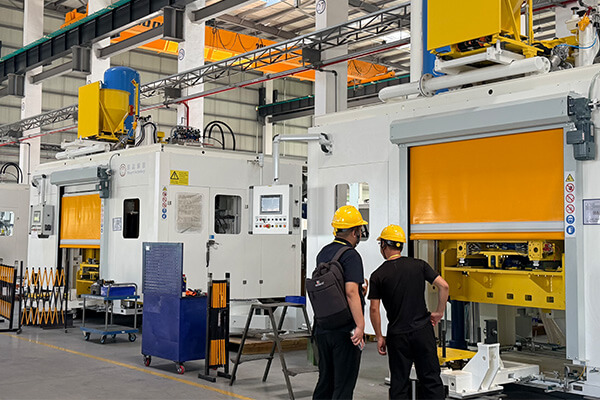
Key Benefits of High-Speed Machine Protection Doors
High-Speed Machine Protection Doors are designed for automated production areas where safety, speed, and stable operation are required at the same time. For robotic cutting equipment, welding cells, and assembly lines, these doors help manufacturers improve machine safety while keeping production cycles efficient.
Improved Operator Safety
Operator safety is the main purpose of Machine Guarding Doors. In robotic cutting and automated machine areas, moving robot arms, cutting tools, sparks, and debris can create serious safety risks. A well-designed Automated Machine Safety Door helps isolate the hazardous working area and prevents operators from entering the machine zone during operation.
When the door is closed, it creates a physical barrier between workers and the running equipment. It can also work with safety switches or interlock systems, so the machine can only operate when the protected area is safely closed. This helps reduce accidental entry and supports safer daily production.
Shorter Cycle Times for Automated Equipment
High-Speed Machine Protection Doors open and close faster than standard industrial doors. This is important for robotic cutting, welding, and assembly cells where the door may need to open many times during one production shift.
Fast operation helps reduce waiting time during loading, unloading, inspection, and material transfer. Instead of slowing down the production line, Machine Protection Doors support shorter cycle times and smoother process flow. This is especially valuable in automotive and electronics manufacturing, where high production efficiency is required.
Better Integration with Robotic Equipment
Modern Industrial Safety Doors for Robotic Equipment should not work as a simple barrier only. They should also communicate with the automated machine system. High-Speed Machine Protection Doors can be connected with PLC systems, machine control signals, safety switches, sensors, and interlock systems.
With proper integration, the door and robotic equipment can work together as one safety system. For example, the door can send open and close signals to the machine, and the machine can control the door according to the production process. This makes the door a practical Automated Machine Safety Door for robotic cutting cells and other automated equipment.
Compact Installation for Limited Machine Space
Many robotic production cells have limited installation space. Standard door systems may not fit well because of side space restrictions, machine frames, cable trays, or surrounding equipment. High-Speed Machine Protection Doors can be customized according to the actual machine layout.
For the Netherlands robotic cutting equipment project, the motor was customized for upward installation. This design helps save horizontal space and reduces interference with nearby machines. It is suitable for compact robotic cutting equipment layouts and supports custom automation equipment design.
Lower Maintenance and Stable Operation
High-Speed Machine Protection Doors are designed for high-frequency industrial use. In automated production, the door may need to open and close repeatedly throughout the day, so stable operation is very important.
A reliable motor and control system help reduce unexpected stoppage and maintenance needs. For continuous industrial production, this means less downtime, smoother machine operation, and better production reliability. When used in automotive and electronics manufacturing, stable Machine Protection Doors can support safer and more efficient long-term operation.
Core Technical Configuration of Machine Protection Rapid Doors
The performance of High-Speed Machine Protection Roll Up Doors depends not only on door speed, but also on the control system, installation method, and automation integration. For robotic cutting equipment and automated production lines, the right technical configuration helps improve safety, reliability, and production efficiency.
| Technical Configuration | Function | Key Benefits for Automated Equipment |
|---|---|---|
| UL Control System for International Projects | The UL electrical control system provides stable and reliable door control for export markets and industrial safety projects. | Supports safer door operation, improves control stability, and makes Machine Protection Doors more suitable for international industrial applications. |
| Stable Control Performance | Ensures smooth opening, closing, stopping, and signal response during frequent operation. | Helps High-Speed Machine Protection Doors work reliably in high-cycle automated production environments. |
| Compatibility with Automated Equipment | The control system can be adapted to different machine signals and production requirements. | Allows better coordination between the door and robotic cutting, welding, or assembly equipment. |
| Custom Upward Motor Installation | The motor can be installed upward according to the equipment layout. | Saves horizontal installation space around the robot cell and helps avoid interference with nearby machines. |
| Compact Layout Design | The door structure can be customized for limited side space or compact machine areas. | Suitable for customized robotic cutting systems and narrow automated production cells. |
| Integration with Sensors and PLC Systems | The door can be connected with PLC systems, sensors, safety switches, and machine control signals. | Helps the door work as an Automated Machine Safety Door within the overall production control system. |
| Safety Interlock Function | The door can provide open/close signal feedback and connect with equipment operation logic. | Supports safer machine operation by helping prevent the equipment from running when the protected area is not safely closed. |
| Sensor-Based Safety Detection | Sensors can detect people, objects, or abnormal conditions near the door area. | Improves safety performance for Industrial Safety Doors for Robotic Equipment and Machine Guarding Doors. |
| Connection with Robotic Equipment Control Logic | The door can work together with robot movement, cutting cycles, and maintenance access control. | Helps improve safety, reduce downtime, and support efficient automated production. |
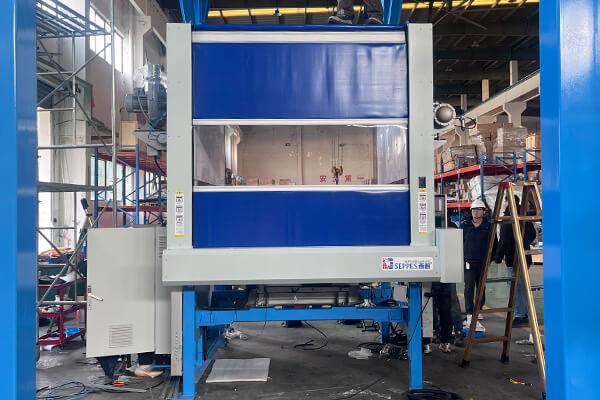
Case Study: Fast Door Exported to the Netherlands for Robotic Cutting Equipment
SEPPES completed a Machine Protection Door Exported to the Netherlands for a robotic cutting equipment project. The door was used in automated equipment designed for the automotive and electronics industries, where machine safety, fast access, and stable operation were important requirements.
For this project, the customer selected High-Speed Machine Protection Doors as the safety access solution for the robotic cutting area. The door was configured with a UL control system to support reliable electrical performance. According to the equipment layout, the motor was customized with an upward installation design, helping the door fit the limited space around the machine.
| Project Item | Details |
|---|
| Product | High-Speed Machine Protection Doors |
| Configuration | UL control system |
| Motor Installation | Customized upward motor installation |
| Export Market | Netherlands |
| Application | Robotic cutting equipment for automotive and electronics industries |
| Product Role | Robot Cutting Machine Safety Door |
Customer Requirements
The customer needed a Robot Cutting Machine Safety Door that could work together with robotic cutting equipment. During machine operation, the door had to help separate operators from the cutting area and reduce the risk of accidental access.
The installation space around the robotic equipment was limited. A standard side motor installation could interfere with the equipment structure or surrounding machine layout. Therefore, the door required a more flexible installation method.
The customer also needed stable and safe door operation for frequent use in an automated production environment. Since the project was exported to the Netherlands, the electrical configuration needed to be suitable for international industrial projects.
Main requirements included:
| Customer Requirement | Purpose |
| Integration with robotic cutting equipment | Support automated machine operation and access control |
| Limited installation space | Avoid interference with the machine structure |
| Stable and safe operation | Improve production reliability and operator safety |
| Export-ready electrical configuration | Support use in an international industrial project |
How to Choose the Right High-Speed Machine Protection Doors
Confirm the Machine Type and Hazard Area
First, identify the type of equipment that needs protection. Common applications include robotic cutting, welding cells, assembly lines, machining centers, and other automated equipment.
Different machines create different risks, such as moving robot arms, cutting tools, sparks, debris, or high-speed mechanical movement. The selected Machine Protection Doors should help isolate the hazardous area and prevent accidental access during operation.
Check Door Size and Available Installation Space
Before choosing the door, confirm the opening size and available installation space. Side space, top space, motor position, and guide rail layout should all be checked.
For compact robotic cells, standard installation may not be suitable. In this case, a customized structure or upward motor installation can help the door fit the machine layout more easily.
Confirm Control System Requirements
A reliable control system is important for automated production. High-Speed Machine Protection Doors can be equipped with a UL control system and connected with PLC systems, machine signals, sensors, safety switches, and interlock systems.
This allows the door to work as an Automated Machine Safety Door, helping the machine and door operate together in a safer and more controlled way.
Evaluate Door Speed and Cycle Frequency
In automated production, door speed affects production efficiency. If the door opens and closes frequently, it should be designed for high-cycle operation.
Fast opening and closing can reduce waiting time, shorten machine cycle time, and support smoother material flow. This is especially important for robotic cutting, welding, and assembly applications.
Consider Industry Requirements
Different industries have different safety and production requirements. Automotive manufacturing often requires durable doors for high-frequency use, while electronics manufacturing may focus more on precise access control and stable operation.
For automotive manufacturing, electronics manufacturing, precision processing, and industrial automation, Industrial Safety Doors for Robotic Equipment should provide safety protection, fast operation, and good compatibility with automated systems.

