


Aluminum Rigid High Speed Rolling Doors: The Complete Guide to Industrial Security and Climate Control
As modern warehouses, manufacturing plants, logistics centers, and food processing facilities continue to pursue higher operational efficiency,aluminum rigid high speed rolling doors gradually replace traditional roller shutters. These advanced industrial door systems combine rapid opening speeds, reliable sealing performance, enhanced security, and energy-saving benefits.
Whether you are searching for industrial high speed shutter doors or complete automated workshop entrance solutions, understanding the features and advantages of these systems can help you make the right investment for your facility.
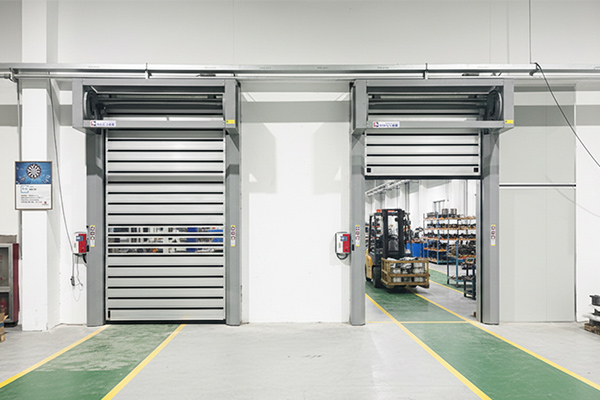
What Are Aluminum Rigid High Speed Rolling Doors?
When global buyers search for what are high speed roller shutter doors. They are often looking for high-performance doors that can handle both heavy traffic and harsh weather. The aluminum rigid version takes this a step further.
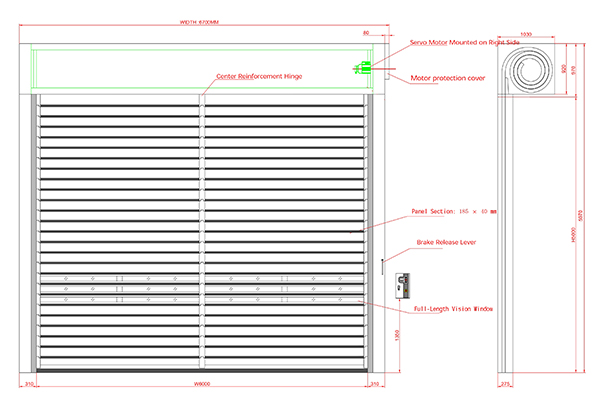
Aluminum rigid high speed rolling doors are motorized industrial doors made from solid aluminum slats or panels that roll up into a compact coil above the opening. According to professional technical blueprints, a premium door panel section measures approximately 40 mm, providing an exceptional strength-to-weight ratio. This allows the heavy-duty rigid rapid rolling door to open and close smoothly, minimizing open-air time during forklift transit.
High speed rigid aluminum doors are great for many types of commercial applications including:
- Manufacturing plants and production facilities
- Cold storage and refrigerated warehouses
- Food and beverage processing environments
- Pharmaceutical and cleanroom facilities
- Distribution centers and loading docks
- Automotive service and assembly operations
4 Major Advantages of Aluminum Rigid Roller Shutter Doors
Theft Protection & Wind Resistance
Security is a primary concern for exterior warehouse gates. A dedicated high speed security roller shutter door features center reinforcement hinges and rigid aluminum slats that form a solid metal barrier against unauthorized entry. Additionally, its sturdy structure can withstand extreme exterior wind loads.
Thermal Break Design
For climate-controlled industries, an ordinary door allows too much energy loss. A high speed insulated roller shutter door is densely injected with polyurethane (PU) foam inside the aluminum profiles. This exceptional thermal barrier is perfect for food processing facilities, cold chain logistics, and refrigerated storage environments.
Advanced Intelligent Automation
Driven by a precise servo motor and an intelligent control panel, these systems operate as fully auto high speed rolling shutter door units. They seamlessly integrate with radar, geomagnetic loops, and safety devices to ensure a hands-free, safe experience for your workforce.
Optimized Visibility
Premium rigid high speed rolling doors come equipped with a full-length vision window section, allowing forklift drivers to see oncoming traffic from the other side, drastically reducing workplace accidents.
Aluminum Rigid vs PVC Fabric High Speed Door
| Feature | Aluminum Rigid High Speed Door | PVC Fabric High Speed Door |
| Curtain Material | Double-layer aluminum alloy profile + PU foam | High-density industrial PVC coated flexible fabric |
| Core Applications | Exterior main entrances, cold chain logistics storage, high-security areas | Interior workshop partitions, cleanrooms, dust-proof isolation channels |
| Anti-Theft & Security | Extremely High: Solid metal physical barrier, anti-pry, and anti-intrusion | Basic: Flexible fabric, easily damaged, no anti-theft function |
| Thermal Insulation | Excellent: PU foam layer provides strong thermal break and temperature control | Basic: Only blocks basic hot/cold air convection |
| Wind Resistance | Strong: Rigid structure, capable of withstanding harsh exterior winds and typhoons | Moderate: Primarily used to resist indoor workshop drafts |
How Do They Work?
The mechanism is straightforward. Aluminum slats link together in a continuous curtain that winds around a counterbalanced drum mounted in a housing above the door opening. A high-torque motor drives the drum, allowing the door to travel at speeds that standard doors can’t match.
Most systems include:
- Control systems — push buttons, motion sensors, loop detectors, or remote triggers that activate the door
- Counterbalance springs — which offset the weight of the curtain and reduce motor strain
- Guide rails — that keep the curtain aligned and stable at high speeds
- Safety edges and photo eyes — which detect obstructions and reverse or stop the door automatically
Modern units often integrate with facility management systems, vehicle loop detection, and traffic light indicators to create smooth, automated traffic flow.
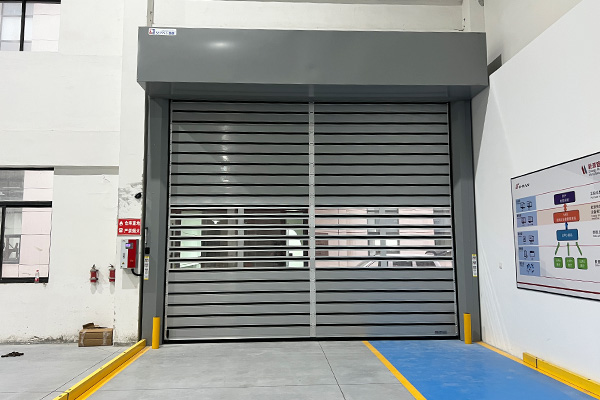
Key Benefits of Aluminum Rigid High Speed Rolling Doors
1. Exceptional Speed
Standard industrial doors may take 20–30 seconds or more to open fully. High speed aluminum doors can open in 2–5 seconds, depending on door height and model specifications. That difference adds up quickly across hundreds of daily cycles.
Faster doors mean:
- Reduced wait times for forklifts and personnel
- Less congestion at high-traffic openings
- Improved throughput across your facility
2. Superior Climate Control
Every second a door stays open, you’re exchanging interior air with whatever is outside. In climate-controlled environments — cold storage, freezer rooms, pharmaceutical spaces — that air exchange translates directly into energy consumption and temperature instability.
The rigid aluminum construction provides a meaningful thermal barrier that flexible doors can’t match. Combine that with fast cycle times and tight perimeter seals, and you dramatically reduce the volume of air exchanged per cycle.
Benefits include:
- Maintained temperature zones across your facility
- Reduced load on HVAC and refrigeration systems
- Improved product integrity in temperature-sensitive environments
- Better humidity control in controlled environments
3. Energy Efficiency
Heat and cold loss through doors is one of the most overlooked energy costs in industrial facilities. A door that opens and closes dozens or hundreds of times per day can account for a substantial portion of your energy bill.
Aluminum rigid high speed doors improve energy efficiency in two ways:
- Speed minimizes the time the opening is exposed
- Insulated panel options (where available) provide an additional thermal resistance layer
Over the service life of the door, the energy savings often contribute significantly to the return on investment.
4. Industrial-Grade Security
Rigid aluminum construction provides a level of physical security that fabric or soft curtain alternatives simply cannot offer. Aluminum is resistant to forced entry attempts, accidental impact from forklifts, and general wear that would damage softer materials.
Security features typically include:
- Solid interlocking aluminum slat profiles
- Reinforced bottom bars and guide rail engagement
- Optional locking mechanisms for after-hours security
- Integration with access control systems
For perimeter openings — docks, exterior walls, or any point of entry to a secured area — rigid aluminum doors are a significantly more robust choice than their flexible counterparts.
5. Long-Term Durability
Aluminum is corrosion-resistant by nature, making these doors well-suited to environments with moisture, chemical exposure, or washdown requirements. The material won’t rust the way steel can, and it maintains structural integrity through temperature cycling that would cause other materials to warp or degrade.
What durability looks like in practice:
- High cycle ratings, often designed for hundreds of thousands of open/close cycles
- Resistance to corrosion in humid or washdown environments
- Stable performance across wide temperature ranges
- Less susceptibility to dents and deformation compared to thin steel alternatives
6. Safety Systems
Fast-moving doors require robust safety integration. Reputable aluminum rigid high speed door systems include multiple layers of safety technology to protect both people and equipment.
Standard safety features to look for include:
- Safety edges — pressure-sensitive strips on the bottom bar that trigger a stop or reversal on contact
- Photo eyes and light curtains — infrared detection across the door opening that stops movement if interrupted
- Break-away or re-engaging bottom bars — designed to release upon impact rather than transmitting force to the door structure
- Visual and audible warning signals — to alert personnel that the door is cycling
Some systems also integrate with facility traffic management, slowing or stopping door cycles when sensors detect personnel in the path.
Maintenance Considerations
One of the practical advantages of aluminum rigid high speed doors is that they’re relatively low-maintenance compared to older manual or slower powered doors — but they’re not maintenance-free.
Regular maintenance tasks typically include:
- Lubricating guide rails and moving mechanical components
- Inspecting slat connections and interlocking profiles for wear
- Checking and testing safety edges and photo eyes
- Reviewing counterbalance spring tension
- Inspecting motor drives and control systems
What to look for in a maintenance program:
- Doors should come with clear manufacturer guidelines for service intervals
- Access to replacement parts should be confirmed before purchase
- Consider whether a service contract with a qualified technician makes sense for your operation
- Keep a log of cycle counts, as many components have rated service lives tied to the number of cycles
Preventive maintenance is always less costly than emergency repairs, especially when a failed door disrupts production or compromises a temperature-controlled environment.
How to Evaluate Aluminum Rigid High Speed Doors: A Buyer’s Checklist
When you’re comparing options, use these criteria to guide your evaluation:
Application Requirements
- What is the door opening size (width × height)?
- What temperature differential does the door need to manage?
- What are the daily and peak cycle volume expectations?
- Is the environment subject to washdown, chemicals, or corrosive elements?
- Are there specific hygiene or contamination control standards to meet?
Performance Specifications
- What is the door’s rated opening speed?
- What is the door’s cycle rating (total lifetime cycles)?
- What is the thermal resistance value (if climate control is a priority)?
- What wind load rating applies to the installation location?
Safety and Compliance
- What safety detection systems are included as standard?
- Does the door meet applicable safety standards for your region or industry?
- Is the control system compatible with your existing facility infrastructure?
Installation and Support
- What are the structural requirements for the surrounding wall and header?
- Is installation included, or do you need a certified installer?
- What is the warranty coverage for components and labor?
- Are spare parts available locally or with short lead times?
Total Cost of Ownership
- What is the estimated energy savings versus your current door solution?
- What are the expected maintenance costs over the product’s service life?
- How does the cycle rating translate to projected replacement timelines?
FAQs
Q 1: What are the three types of aluminum entrance doors?
The three most common types of aluminum entrance doors are Hinged doors, Sliding doors, and Rigid rolling doors. The best choice depends on speed, insulation, security, and operational requirements.
Q 2: What industries use rigid high-speed doors?
Rigid high-speed doors are commonly used in logistics centers, warehouses, food and beverage plants, pharmaceutical facilities, automotive factories, electronics manufacturing plants, cold chain facilities, and distribution centers. They help improve operational efficiency while maintaining environmental control and workplace safety.
Q 3: Are rigid high-speed doors suitable for exterior applications?
Yes. Rigid high-speed doors are specifically designed for exterior industrial openings. Their insulated aluminum panels and robust guide systems provide excellent wind resistance, weather protection, and security. This makes them a preferred solution for warehouses, logistics centers, manufacturing plants, and loading bay entrances.
Q 4: How much does a rigid high speed shutter door price?
The cost of a high-speed door depends on door size, insulation level, speed requirements, control systems, and installation conditions. Standard industrial high-speed doors may range from several thousand dollars to significantly higher for customized insulated rigid models. Contacting a manufacturer for a project-specific quotation is the most accurate way to determine pricing.
Conclusion
Aluminum rigid high speed rolling doors represent a meaningful upgrade over standard industrial door solutions for any facility where security, climate control, hygiene, and throughput all matter. They’re not the right fit for every opening — but for the applications where they shine, the operational and financial case is compelling.
Whether you’re upgrading an aging dock door system, building a new cold storage facility, or tightening security at a critical access point, this guide gives you the foundation to make a confident, informed decision.

