
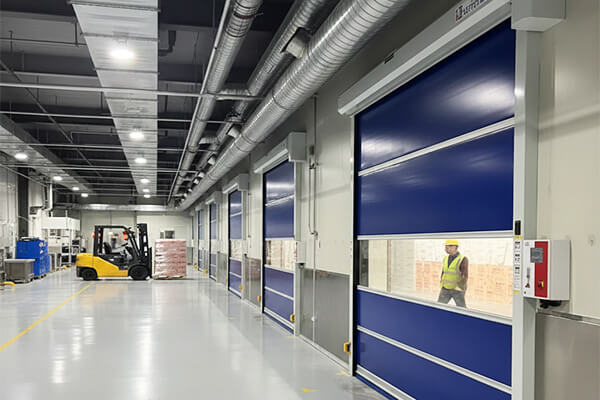

The Essential Guide to High Speed Door Maintenance in 2026
In modern industrial logistics, high speed door maintenance is the difference between seamless throughput and costly operational bottlenecks. As facilities transition toward Industry 4.0, the reliability of rapid-access points—engineered for over 250,000 cycles—is critical for maintaining climate control and facility security.
This guide outlines a proactive framework for managing high-performance door systems. By shifting from reactive repairs to a structured preventative maintenance schedule, facility managers can significantly reduce the Total Cost of Ownership (TCO) while maximizing the lifespan of their industrial assets.
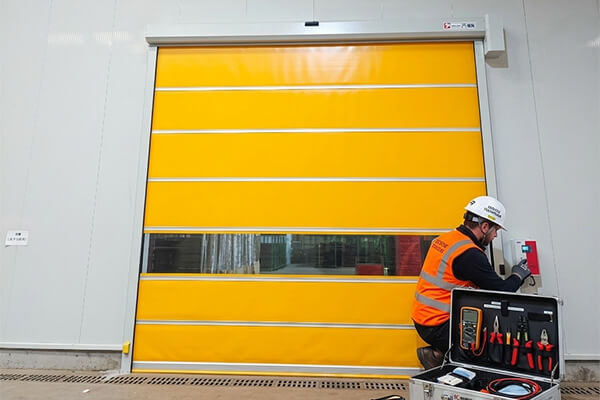
Understanding High-Speed Doors
What are high-speed doors?
High-speed roll up doors are specialized industrial door systems designed for rapid opening and closing cycles, typically at speeds exceeding 1.0 m/s. Unlike standard sectional or rolling doors, they are engineered for high-frequency use—often rated for hundreds of thousands of cycles—to support seamless logistics and environmental control.
Key industries relying on high-speed doors
- Cold Chain & Food Processing: Maintaining “unbroken” refrigeration by minimizing air exchange during transit.
- Pharmaceuticals & Cleanrooms: Ensuring airtight seals to block dust, pests, and contaminants from sensitive areas.
- Automotive Manufacturing: Supporting just-in-time (JIT) production lines with high-speed access for parts delivery.
- Logistics & Distribution: Optimizing heavy-traffic loading bays for constant forklift and vehicle movement.
Common problems without proper maintenance
Neglecting a structured maintenance schedule often leads to significant operational risks:
- Energy Inefficiency: Worn EPDM seals or slow cycle speeds allow conditioned air to escape, causing utility costs to spike.
- Safety Hazards: Failure of infrared light curtains or safety edges can lead to accidents involving personnel or forklifts.
- Mechanical Breakdown: Lack of lubrication or misaligned tracks can cause the “Turbo” spiral or motor to seize, resulting in total facility downtime.
- Premature Wear: Ignoring small faults, such as encoder errors, leads to cumulative damage that shortens the door’s design lifespan.
Benefits of Regular High Speed Door Maintenance
Enhanced Durability and Lifespan
Regular servicing protects high-precision components, such as German-engineered servo motors and multi-turn absolute encoders, from premature wear. Consistent maintenance ensures the system reaches its full design potential of 250,000 or more cycles.
Improved Safety for Employees and Equipment
Routine inspections verify the integrity of non-contact safety features, including infrared light curtains and wireless safety edges. Ensuring these systems respond within milliseconds prevents accidents involving personnel or forklifts during rapid door movement.
Energy Efficiency Through Better Temperature Control
Maintaining the integrity of EPDM perimeter seals and high-speed operation (up to 2.5 m/s) minimizes air exchange. This supports EETA energy standards by preserving internal climates and reducing the workload on HVAC systems.
Cost Savings by Preventing Major Repairs
Regular inspection of high-speed doors allows timely resolution of minor issues, such as debris in the tracks or loose fasteners caused by vibration. This helps prevent serious malfunctions. Such maintenance avoids repair and replacement costs, thereby reducing the total cost of ownership.
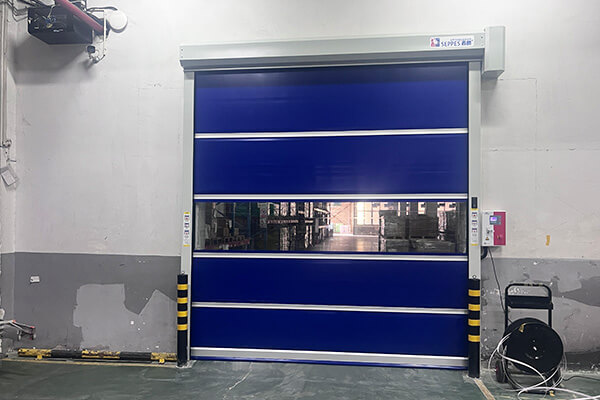
High Speed Door Maintenance:Daily and Weekly Checklist for Facility Managers
Visual Inspection: Curtain & Track Integrity
Continuous, high-speed operation requires the door curtain and guide systems to remain in optimal physical condition to prevent mechanical binding.
- Curtain Surface Check: Inspect the door curtain for punctures, tears, or signs of material fatigue that could compromise thermal insulation or air pressure seals.
- Side Track Clearance: Ensure that the vertical side tracks are entirely free of debris, dust, or grease buildup to prevent friction and ensure smooth travel.
- Hardware Stability: Verify that all visible bolts and fasteners on the track brackets remain tightened to withstand the vibrations of high-frequency cycles.
Safety Sensor Testing: Non-Contact Protection
- Infrared Light Curtain: Verify that the dual-side infrared light curtains are clean and responsive; the door should immediately reverse or stop if the light beam is interrupted.
- Wireless Safety Edges: Test the wireless safety bottom edges to ensure they trigger an immediate “re-open” command upon contact with any obstruction.
- Fault Code Monitoring: Check the visualized LCD interface for any active fault codes related to safety circuit interruptions.
Customize Automatic Activation Method Check
Consistent activation ensures that logistics flow remains uninterrupted and the door only opens when required, preserving the internal environment.
- Radar & Motion Sensors: Test the radar sensors to confirm they accurately detect approaching forklifts or personnel at the designated distance.
- Magnetic Loops & Pull Cords: Manually trigger all auxiliary activation devices, such as floor-embedded magnetic loops or overhead pull cords, to ensure a consistent response.
- Remote & Bluetooth Linkage: If equipped with smart access, verify that Bluetooth or remote-control signals are received without interference or delay.
Daily Inspection Checklist: Rapid Door Systems
| Inspection Category | Checkpoint Item | Operational Requirement |
| Visual Integrity | Door Curtain & Slats | Check for visible punctures, tears, or surface abrasions that could impact thermal insulation. |
| Mechanical Path | Side Tracks & Guides | Ensure tracks are free of debris, dust, or obstructions to prevent friction during rapid travel. |
| Safety Sensors | Infrared Light Curtain | Verify the dual-side infrared array triggers an immediate stop or reversal when the beam is broken. |
| Safety Bottom | Wireless Safety Edge | Test the bottom edge sensor to ensure the door re-opens instantly upon making physical contact. |
| Activation | Radar & Motion Sensors | Confirm the radar accurately detects approaching traffic at the pre-set distance for consistent opening. |
| Positioning | Limit Switch Accuracy | Observe the door at full open and full close positions to ensure the absolute encoder maintains precision. |
| User Interface | LCD Control Display | Check the visualized HMI for any active fault codes or maintenance alerts from the CPU. |
| Emergency | Manual Release Device | Verify that the manual handle or brake release is accessible and unobstructed for emergency use. |
| Environment | Sealing Gaskets | Inspect EPDM perimeter seals for gaps to prevent air leakage and maintain climate control. |
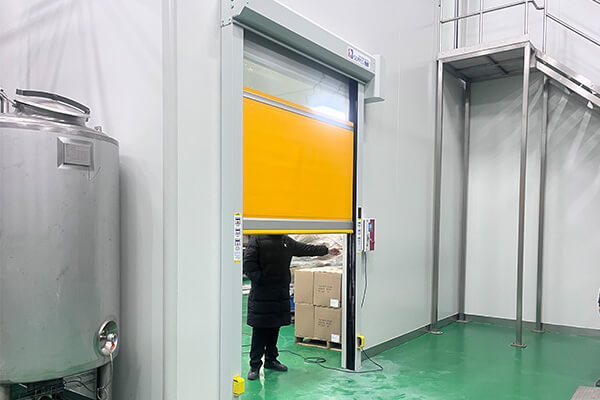
Four Signs Your High Speed Roller Door Needs Maintenance
Unusual Noises During Operation
High-performance doors, especially those utilizing non-contact spiral technology, are engineered for near-silent movement.
- Grinding or Squealing: Often indicates a lack of lubrication in the bearings or debris trapped within the “Turbo” spiral tracks.
- Rattling: Suggests that mounting bolts or wind-resistant ribs have loosened due to high-frequency vibrations.
- Motor Hum: A persistent electrical hum may signal that the German-engineered servo motor is struggling against mechanical resistance.
Slower Opening and Closing Speeds
Efficiency is defined by rapid cycle times, typically between 0.8 m/s and 2.0 m/s.
- Lagging Response: If the door fails to reach its designated peak speed, it may be due to a failing capacitor or a drive system entering “Safe Mode” due to a detected fault.
- Increased Air Exchange: Slower operation compromises climate control, leading to higher energy consumption in cold storage or cleanroom environments.
- Encoder Drift: Slower speeds can also be a symptom of the multi-turn absolute encoder losing its positioning calibration.
Visible Damage or Misalignment
Physical irregularities are often the precursor to catastrophic mechanical failure.
- Curtain Fatigue: Look for tears or punctures in the PVC or aluminum foil air cushion insulation that could snag in the tracks.
- Guide Rail Obstructions: Even minor dents in the 2.0mm cold-rolled steel frame can cause the door to bind, triggering an emergency stop.
- Seal Gaps: Daylight visible through the EPDM perimeter gaskets indicates that the door is no longer airtight, allowing dust and pests into the facility.
Frequent Breakdowns or Malfunctions
- Intermittent Sensor Failure: If the infrared light curtain or safety edges trigger false stops, the safety circuit may be compromised.
- HMI Fault Codes: Frequent alerts on the visualized LCD interface are a direct communication from the CPU that internal components are operating outside of safe parameters.
- Manual Override Reliance: If the door frequently requires the use of the emergency manual release, the automated logic or power supply is failing.
Key High Speed Door Maintenance Practices
Implementing a structured approach to high speed door maintenance ensures that industrial assets remain safe, efficient, and reliable over their entire design life. Following these core practices helps maintain the “One Door, One Code” standard for lifelong operational service.
Routine inspections and wear and tear checks
Consistent visual and physical audits are the first line of defense against mechanical failure.
- Curtain and Panel Integrity: Inspect the three-layer composite or aluminum panels for punctures, tears, or surface abrasions that could compromise thermal insulation.
- Track and Guide Clearance: Ensure that side tracks and “Turbo” spiral rails are free of debris, dust, or obstructions that cause friction during high-speed travel.
- Hardware Stability: Regularly verify that all mounting bolts, wind-resistant ribs, and fasteners remain tightened to withstand vibrations from high-frequency cycles.
- Sealing Systems: Check EPDM perimeter gaskets for gaps or wear to prevent air leakage and maintain strict climate control.
Lubrication of moving parts
Proper lubrication reduces friction, heat, and noise, which are primary indicators of component fatigue.
- Bearings and Rollers: Apply high-quality industrial lubricants to NSK universal bearings and steel rollers to ensure smooth, high-frequency operation.
- Drive Chain and Gears: For models utilizing chain hoists or external gears, maintain a consistent lubrication schedule to prevent seizing or snapping.
- Hinges and Pivot Points: Ensure all articulating hardware moves freely to prevent unnecessary strain on the German-engineered servo motor.
Testing safety features and emergency stops
Functional safety circuits are non-negotiable for protecting personnel and avoiding equipment damage during rapid opening and closing.
- Infrared Light Curtains: Verify that the dual-side infrared arrays trigger an immediate stop or reversal when the beam is interrupted.
- Wireless Safety Edges: Test the bottom edge sensors to confirm the door re-opens instantly upon making physical contact with an obstruction.
- Emergency Manual Release: Ensure that the manual handle or brake release is accessible and functional, allowing the door to be opened using a standard wrench during power failures.
- Fault Code Monitoring: Regularly check the visualized LCD interface for any active fault codes from the CPU that indicate safety circuit interruptions.
Technical Maintenance: Deep Dive into Mechanical Components
| Component System | Technical Maintenance Focus | Industrial Performance Standard |
| Servo Motor & Drive | Inspecting German-brand (e.g., FROG PUPIL) motors for unusual heat, vibration, or noise. | 0.3s response time; ensures precise high-frequency operation and torque delivery. |
| Spiral Track System | Cleaning the Turbo non-contact spiral tracks to remove debris and ensure friction-free travel. | Prevents slat-to-slat contact; maintains near-silent operation and preserves curtain finish. |
| Sealing Integrity | Inspecting EPDM rubber seals and U-type PVC tracks for wear, cracks, or gaps. | Ensures an airtight, pest-free envelope; critical for EETA energy efficiency. |
| Positioning Control | Calibrating the multi-turn absolute encoder to prevent cumulative positioning errors. | Maintains exact limit positions; avoids the “drift” common in incremental encoders. |
| Curtain Structure | Checking the three-layer composite (PVC + aluminum foil) for punctures or fatigue. | Class 2 Flame Retardant; supports thermal insulation and structural durability. |
| Safety Logic | Testing infrared light curtains and wireless safety edges for millisecond response times. | IP54 protection; ensures failsafe operation in harsh industrial environments. |
结论
In the high-demand logistics environment of 2026, high speed door maintenance is no longer a reactive chore, but a strategic necessity for operational excellence. By implementing a structured framework of daily inspections and technical deep dives, facility managers can safeguard their investment in advanced German-engineered servo motors and high-cycle spiral technology.
FAQ: High Speed Door Maintenance
Why is preventive maintenance important for industrial high speed doors?
Preventive maintenance is essential for industrial and commercial high-speed doors because regular maintenance reduces downtime, extends the lifespan of door systems, and helps avoid costly repairs. By following a maintenance plan and inspection and maintenance schedule, a trained technician can spot signs of wear and tear, damaged panels, or misalignment before they become major issues. Proactive maintenance keeps your high-speed doors operating smoothly and ensures smooth operation in busy warehouse and industrial environments.
What maintenance tips can help extend the lifespan of overhead door systems?
Simple maintenance tips include keeping the door clean with a soft cloth and mild detergent, lubricate moving parts regularly with manufacturer-approved lubrication, check balance and tension, and ensure safety sensors are aligned and functional. Following the manufacturer’s guidelines and a maintenance plan will help extend the life of overhead door systems and reduce repair costs from ignored issues.
When should I call for door repair versus scheduling routine maintenance?
If you notice signs of damage such as large dents, broken or bent tracks, abnormal noises, failure to open/close, or visible frayed cables, call for high-speed door repair immediately. Routine maintenance is for inspections, lubrication, and minor adjustments to prevent problems. A professional maintenance technician can advise whether a problem requires repair or maintenance and handle any repairs to restore safe operation.
Can I lubricate moving parts myself on an automatic doors system?
You can lubricate moving parts like hinges, rollers, and bearings with the correct lubricant, but always follow manufacturer instructions. Use lubricants recommended for industrial high speed and commercial door systems and avoid over-applying. If you are unsure, schedule professional maintenance services—trained technicians can properly maintain and lubricate components to keep doors functioning and to help avoid voiding warranties.
How do maintenance programs and proactive maintenance reduce repair costs?
Maintenance programs that include regular checks, planned maintenance, and proactive maintenance reduce costly repairs by identifying small problems early—loose hardware, worn belts, or misaligned sensors—before they cause failure. Regular maintenance and professional servicing improve longevity, lower unexpected downtime, and spread maintenance expenses predictably rather than incurring large repair costs when failures occur.
What are common signs of wear I should look for in a warehouse high-speed door?
Look for signs of wear and tear such as slow or jerky movement, unusual vibration or noise, fraying cables, worn seals, damaged panels, sagging sections, and sensor malfunctions. Inspect at least once a month for visual issues and report any anomalies to your door service technician. Early detection helps keep your doors safe and operational.
Do industrial roll-up doors and high-speed garage doors require different maintenance approaches?
Both industrial roll-up doors and high-speed garage doors require inspection and maintenance, but specifics vary: high-speed systems often need more frequent checks on controls, sensors, and drive components due to rapid cycling, while roll-up doors may need more attention to curtain and spring systems. Use a maintenance plan that reflects door type, usage levels, and manufacturer’s guidelines to properly maintain each system.
How can I choose a professional maintenance service for commercial and industrial doors?
Choose a provider experienced in commercial door maintenance and high-speed door maintenance, preferably certified by manufacturers. Verify they offer comprehensive maintenance services, emergency high-speed door repair, and planned maintenance programs. Ask about technician training, references from warehouses or industrial facilities, and whether their maintenance plan includes regular inspections, lubrication of moving parts, and documentation to help extend the life of your doors.
References
Technical Standards:ASTM International: astm.org


 Chinese
  English
  Arabic
  German
  Spanish (Mexico)
  French
  Uzbek
Uzbek  Russian
  Japanese
  Korean
  Spanish (Peru)
  Spanish (Venezuela)
  Spanish (Ecuador)
  Spanish (Puerto Rico)