
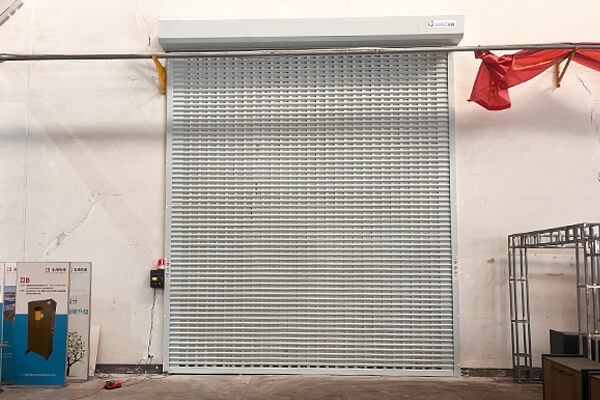

太陽光発電設備製造向け穿孔アルミニウムローラーシャッタードア
アクセス、通気、設置スペースは、太陽光発電設備の設計における実用的な課題である。 穴あきアルミニウムローラーシャッタードア は垂直方向の開閉を可能にし、閉じたカーテンを通して空気を通過させるため、完全な密閉が不要な設備筐体の選択肢となる。.
適合性は開口部の寸法だけでは決まらない。穴あきパターン、操作頻度、制御要件のすべてが重要である。本ガイドでは、穴あき アルミニウムローラーシャッター が太陽光発電設備製造においてどのように適合し得るか、またドアを指定する前に確認すべき事項について説明する。.
穴あきアルミニウムローラーシャッタードアとは何か
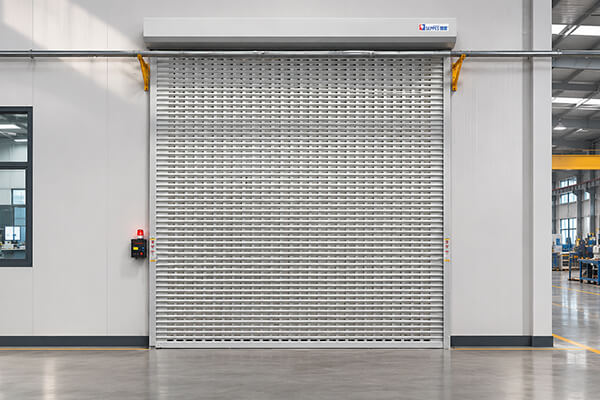
穴あきアルミニウムローラーシャッタードアは、小さな開口部を有する互いに噛み合うアルミニウムスラットで構成されたカーテンを備えている。これらの穴あき加工により、閉じたカーテンを通して空気と光が通過し、部分的な視認性が確保される。太陽光発電設備の筐体においては、この設計は通気が必要で完全な密閉が不要なアクセス開口部に適する場合がある。.
基本構成と動作原理
他のローラーシャッタードアと同様に、シャッターはサイドガイドに沿って垂直方向に移動し、開口部上方のシャフトに巻き取られる。この配置により、開き戸に必要なスイングクリアランスが不要となるが、巻取り部とガイドには依然として設置スペースが必要である。.
主要構成部品は、スラットカーテン、ガイドレール、ローラーシャフト、ボトムレール、駆動機構である。ガイドはカーテンの動きを導き、ボトムレールはその下端を補強する。操作は手動または電動とすることができ、構成とアクセス要件に依存する。.
穴あきカーテンとソリッド設計の違い
穴あきカーテンはスラットを通して空気の流路を提供するが、ソリッドカーテンは提供しない。開口部のサイズ、間隔、比率は、通気、視認性、構造性能に影響を与える。.
どちらの設計も、防塵密閉や機械の安全保護を提供するものと想定すべきではない。選定は、筐体の機能、環境条件、および特定された危険性に依存する。.
太陽光発電設備に穴あきシャッターを検討する理由
太陽光発電設備の設計者は、通気、点検アクセス、限られた床面積のバランスを取る必要がしばしばある。穴あきシャッターは、適切な筐体開口部においてこれらのニーズに対応できる。その価値は、設備レイアウト、動作条件、必要な分離レベルに依存する。.
閉じたカーテンを通した通気
設備筐体は、アクセス開口部が閉じている場合でも通気が必要な場合がある。穴あきカーテンは空気が通過する経路を提供し、ドアを開けたままにすることなく筐体の通気設計を支援できる。.
しかし、穴あき加工だけでは十分な冷却は保証されない。エンジニアは、ファンや排気システムと併せて、開口率、通気抵抗、設備の熱負荷を評価すべきである。防塵管理や圧力分離が必要な場合、開放型カーテンは不適切な場合がある。.
設備点検のための部分的な視認性
保守チームは、筐体を開けるかどうかを判断する前に、インジケーターを確認したり、明らかな障害物を特定したりする必要がある場合がある。穴あきスラットは、シャッターが閉じたままでも限定的な視認アクセスを提供できる。.
有効な視認性は、穴のサイズ、照明、視角、内部部品の位置に依存する。したがって、カーテンは操作者の通常の視認位置から評価すべきである。詳細な観察が不可欠な場合には、透明な点検窓の代替とはならない。.
垂直方向の開閉と設置スペース
開き戸はスイングクリアランスを必要とし、隣接する設備、通路、保守エリアと競合する場合がある。垂直方向に巻き取るシャッターはこのスイングエリアを回避し、コンパクトな生産レイアウトにおけるアクセスを簡素化できる場合がある。.
設置には依然として、巻取り部のための十分なヘッドルーム、ガイドのための側方クリアランス、保守のためのアクセスが必要である。これらの寸法を早期に確認することで、設備組立時の干渉を回避しやすくなる。.
アルミニウムローラーシャッタードア:材料とカーテン設計
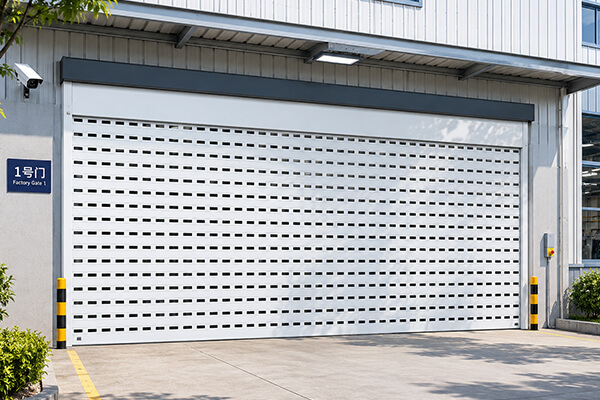
アルミニウムローラーシャッタードアのカーテン設計は、筐体の動作環境とアクセス要件に適合させるべきである。太陽光発電設備においては、材料選定、スラット構造、穴あきレイアウトを個別に指定するのではなく、一体として評価する必要がある。.
スラット構造と表面仕上げ
互いに噛み合うアルミニウムスラットがカーテンを形成し、開口部上方で巻き取られることを可能にする。スラットのプロファイル、厚さ、接続詳細は、組立体の重量、剛性、巻取り挙動に影響を与える。選定は、開口部寸法と操作頻度に関するメーカーの検証済み限界に従うべきである。.
表面仕上げにも注意を払うべきである。利用可能な製品オプションに応じて、陽極酸化処理や粉体塗装を検討できる。特に化学薬品の飛沫や頻繁な拭き取りが予想される場合には、現場の湿度、洗浄剤、洗浄方法との適合性を確認すること。指定した仕上げについて保守ガイダンスを入手すること。.
穴あきパターンと開口率
アルミニウム穴あきローラーシャッター を指定する際には、, 穴の形状、穴のサイズ、間隔をカーテン構造と併せて評価する。開口率は、穴あき領域のうち開口部が占める割合を表すものであり、設置されたドアを通る空気流量を直接示すものではない。.
より大きな開口面積は通気と視認性を支援する可能性があるが、構造要件および内部の危険源へのアクセスも考慮する必要がある。サプライヤーに穴あき図面、開口率計算の根拠、および関連する性能データを求めること。.
PV製造設備における潜在的な用途
穴あきアルミニウムローラーシャッタードアは、通気、部分的な視認性、コンパクトな開閉動作が有用なPV製造設備の特定のアクセス開口部に適する場合がある。各設置場所は、筐体の目的、保守作業、動作条件に照らして評価すべきである。.
補助設備およびサービス用筐体
補助設備周辺のサービス開口部は、通気を確保しながら閉じた状態を維持する必要がある場合がある。技術者が部品への偶発的なアクセスを必要とし、設備筐体が密閉分離を必要としない場合には、穴あきカーテンを検討できる。.
シャッターを指定する前に、通気要件、粉塵への曝露、洗浄手順との適合性を確認すること。浮遊汚染物質や液体の飛沫が穴あき部を通して通過し、敏感な部品に影響を与える可能性のある位置は避けること。.
自動ハンドリングシステム周辺の保守アクセス
自動ハンドリング設備の周辺では、開き戸がコンベア、隣接機械、保守経路とスペースを競合する場合がある。垂直方向に巻き取るシャッターは、ドアリーフがこれらの領域に突出することなく保守アクセスを提供できる場合がある。.
開口部は依然として、保守に必要な工具、交換部品、技術者の動きに対応する必要がある。危険な動作へのアクセスを提供する場合、完全な配置には安全評価が必要であり、必要なインターロックおよびカーテンを通した手の到達に対する対策を含む。.
組立設備付近の周辺開口部
組立設備付近の周辺サービス開口部は、日常点検や偶発的な部品交換が必要な場合にシャッターが有益となり得る。部分的な視認性は、スタッフがより詳細な点検が必要かどうかを判断するのに役立つ。.
適合性は近隣のプロセスに依存する。穴あき設計は、管理された清浄度、気密分離、レーザー封じ込め、密閉プロセスチャンバーを必要とする用途とは分離すること。ドア構成を確定する前に、提案された設置場所を設備設計者と確認すること。.
電動ローラーシャッタードア:駆動と制御の統合
太陽光発電設備においては、電動ローラーシャッタードアはアクセス作業と動作サイクルに基づいて選定すべきである。シフトごとに数回使用される保守用開口部は、生産中に繰り返し動作するドアとは異なる要件を持つ。.
操作頻度と駆動選定
Define the expected cycles per hour, periods of continuous use and required opening time before selecting the drive. The supplier should confirm suitability for the curtain dimensions, weight and duty cycle.
Check the available power supply and space for the motor, cables and service access. Avoid specifying a faster opening speed without considering stopping behaviour, moving-door hazards and the equipment’s control sequence.
Door Position Feedback and Control Interfaces
The machine designer should define which signals are needed, such as open, closed, movement command and fault status. Confirm that the proposed drive and controller support these functions and document the interface before installation.
A standard position signal should not be assumed to perform a safety function. Where machine operation depends on the door’s position, specify the required safety functions separately and validate the complete arrangement.
Maintenance Access and Manual Operation
Consider how technicians will access the enclosure following a power failure or drive fault. Where manual operation is available, confirm how it works, where it can be reached and whether the curtain remains controlled during use.
Include the operating instructions in the equipment documentation. Manual opening does not replace the isolation procedures required before maintenance.
7 Essential Checks Before Specifying a Perforated Aluminum Roller Shutter Door
Before choosing a shutter for photovoltaic equipment, confirm how the opening will be used and what the enclosure must achieve. These seven checks provide a practical starting point for discussions with the supplier.
1. Clear Opening Dimensions
Specify the usable width and height required after installation. Allow for the tools, replacement parts and maintenance tasks that must pass through the opening.
2. Headroom and Side Clearances
Check the space available for the coil, guides, drive and mounting brackets. Include service access so components can be inspected or replaced without unnecessary dismantling.
3. Perforation Pattern and Ventilation Needs
Review hole size, spacing and open-area ratio against the enclosure’s ventilation requirements. Open-area percentage alone does not establish the airflow through the installed assembly.
4. Material, Finish and Cleaning Conditions
Confirm the slat specification and finish against humidity, cleaning agents and potential splashes. Ask for cleaning and maintenance instructions for the proposed configuration.
5. Operating Frequency and Drive Selection
Provide the expected cycles per hour, opening time and available power supply. The supplier should confirm that the drive is suitable for the curtain size, weight and operating pattern.
6. Control Interfaces and Position Feedback
Define the commands, position signals and fault information required by the equipment controller. Document supported interfaces before installation rather than assuming compatibility.
7. Safety and Maintenance Access
Assess hazards associated with door movement and access to equipment behind the curtain. Where reaching towards a machinery hazard is possible, consult relevant guidance such as ISO 13857 on machinery safety distances as part of the risk assessment. This reference does not establish certification of the door assembly.
How to Specify the Right Shutter for Your Equipment
Start with an installation drawing and a clear description of the opening’s purpose. These give the supplier a more useful basis for selection than width and height alone.
Opening Dimensions, Headroom, and Guide Clearances
Record the required clear opening, mounting arrangement and available space above and beside the enclosure. Confirm whether dimensions refer to the structural opening or the usable opening after installation.
Check for interference with cable trays, pipework, machine frames and adjacent access panels. Allow space to inspect and replace the motor, guides and curtain components without unnecessary equipment dismantling.
Environmental and Cleaning Conditions
Describe the conditions at the proposed opening rather than relying on a general factory specification. Relevant details include temperature, humidity, dust, cleaning agents and the possibility of liquid splashes.
For a ventilated equipment enclosure, establish whether air passing through the curtain could carry contamination towards sensitive components. Where separation is essential, consider a different curtain or enclosure design.
Safety Assessment and Access Requirements
Clarify whether the door provides service access, restricts unauthorised entry or forms part of a machinery safeguarding arrangement. These functions require different design considerations.
Assess access through the perforations, around the guides and beneath the curtain, as well as hazards created by door movement. Any required interlocking, protective devices or stopping functions should be specified by the responsible machine designer.
Use the following checklist when requesting a configuration:
Perforated vs. Solid Shutters for Equipment Enclosures
Choosing between perforated and solid shutters starts with the enclosure’s function. Ventilation and partial visibility may be useful in one location, while another requires greater separation from the surrounding environment.
| Consideration | Perforated curtain | Solid curtain |
|---|---|---|
| Air passage | Provides openings through the slats | No perforations through the slats; other gaps may remain |
| 視認性 | Allows limited views under suitable conditions | Blocks direct viewing through the curtain |
| Dust and splash separation | Openings permit passage | May provide greater separation, depending on the complete assembly |
| 洗浄 | Perforations introduce additional edges to clean | Continuous slat surfaces may simplify some cleaning tasks |
| 設置 | Requires coil, guide and service clearances | Also requires coil, guide and service clearances |
| 安全機能 | Must be assessed for the intended use | Must also be assessed for the intended use |
Neither construction alone establishes airtightness, cleanliness or machinery protection. If the opening serves a controlled process area, specify the required performance first and ask the supplier to confirm whether the complete door assembly can meet it.
よくある質問
Is a Perforated Aluminium Roller Shutter Different from an Aluminum Version?
“Aluminium” and “aluminum” are regional spellings of the same material name. A Perforated Aluminium Roller Shutter is therefore not a different product category solely because of its spelling. Compare the actual alloy, slat profile, dimensions, perforation pattern and drive specification when reviewing quotations.
Can the Door Be Connected to a Machine Control System?
Connection may be possible where the selected controller supports the required commands and feedback. Confirm signal types, electrical requirements and fault behaviour with both suppliers. Any safety-related communication or interlocking needs separate specification and validation; ordinary control compatibility does not establish safety performance.
Does a Perforated Curtain Provide Dust-Tight Separation?
No. The perforations create open paths through the curtain, so it should not be specified as a dust-tight barrier. If sensitive components require protection from airborne particles, review the enclosure design, ventilation route and filtration requirements before choosing the door.
What Information Is Needed for a Custom Quotation?
Provide the clear opening dimensions, installation drawing, available mounting space, operating frequency and site power supply. Add details of the environment, finish, perforation needs and control interfaces. Explain the maintenance task and any identified safety requirements so the supplier can assess the proposed configuration accurately.
Discuss Your PV Equipment Shutter Requirements
Selecting a Perforated Aluminum Roller Shutter Door starts with understanding the access opening and its role in the equipment. Confirm ventilation needs, maintenance space, operating frequency and control requirements before finalising the configuration.
Share your opening dimensions, equipment layout and operating conditions to discuss a suitable shutter arrangement. Include any requirements for environmental separation or machinery protection so these can be assessed during the selection process.

