
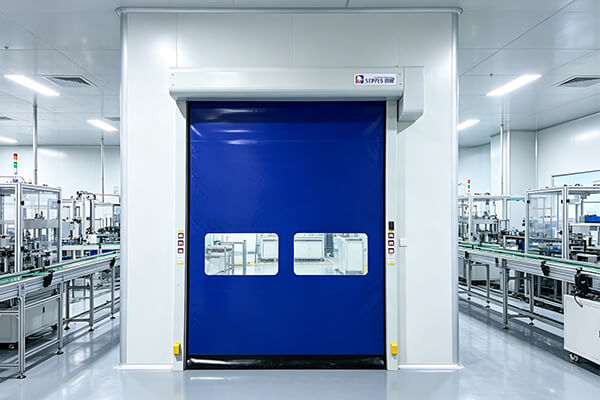

Puertas rápidas de grado alimentario para plantas de procesamiento de alimentos: características, beneficios y selección
In food processing plants, frequent door openings between production and logistics areas can allow dust, insects, and airborne contaminants to enter controlled environments. Food grade high speed doors help address these challenges by providing fast, automated access while supporting hygiene and environmental separation. Unlike standard industrial doors, food processing facilities often require door systems that can withstand humidity, frequent cleaning, and exposure to cleaning chemicals.
This guide explains the key features, hygiene considerations, material options, and selection criteria for choosing the right food grade high speed door for your facility.
What Are Food Grade High Speed Doors?
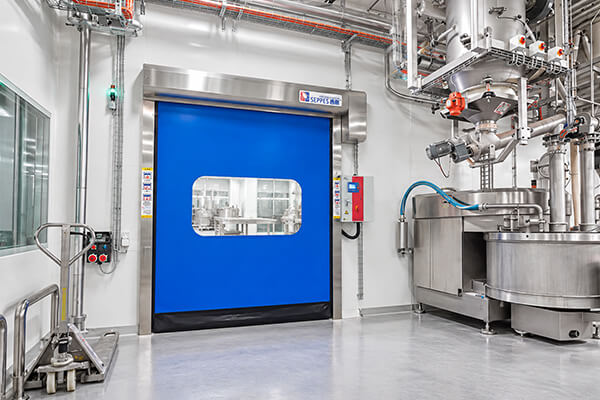
Food grade high speed doors are fast-operating industrial doors designed for food processing environments where hygiene, contamination control, and efficient access are essential. Unlike standard warehouse high speed doors, they incorporate features suited to hygienic production areas, including:
- Easy-to-clean surfaces: Smooth PVC curtains and optional stainless steel frames support routine cleaning.
- Effective sealing: Side guides and bottom seals help reduce dust, insects, and airborne contaminants.
- Operación rápida: Rapid opening and automatic closing minimize unnecessary air exchange.
- Touchless access: Radar sensors and automated controls reduce physical contact.
These food hygiene doors support cleaner, more efficient production environments. However, food-grade does not automatically indicate a specific certification; suitability depends on materials, design, and applicable hygiene requirements.
Why Food Processing Plants Need Food Hygiene Doors
Food processing plants must maintain strict hygiene standards while managing frequent movement of workers, forklifts, and materials. Food hygiene doors help separate production zones, minimize environmental contamination, and support efficient daily operations. Compared with conventional industrial doors, properly specified high speed doors for food processing offer faster access, improved sealing, and automated operation to meet demanding hygiene requirements.
Preventing Dust, Insects, and Cross-Contamination
Frequent door openings can allow dust, insects, and airborne particles to enter food production areas, increasing the risk of contamination. Food hygiene doors equipped with effective sealing systems and automatic closing functions help reduce these risks by limiting the time doorways remain open.
Zipper-style high speed doors provide enhanced side sealing, making them suitable for hygiene-sensitive processing environments.
Supporting Hygiene Zoning in Food Production
Food factories often separate raw material handling, processing, and packaging areas to reduce cross-contamination risks.
Properly selected food doors help maintain these hygiene zones by controlling access between areas with different cleanliness requirements. Touchless sensors and automatic operation can also reduce unnecessary contact with door controls, supporting hygienic workflows.
Reducing Air Exchange and Temperature Fluctuations
Temperature control is essential in meat processing, dairy production, and refrigerated food facilities. Doors that remain open for extended periods can increase air exchange, causing temperature fluctuations and additional refrigeration loads.
Fast-opening and automatically closing high speed doors help minimize unnecessary air exchange, supporting more stable processing conditions and potentially reducing energy consumption.
Improving Forklift Traffic and Production Flow
Food processing plants must maintain strict hygiene standards while managing frequent movement of workers, forklifts, and materials. Food hygiene doors help separate production zones, minimize environmental contamination, and support efficient daily operations. Compared with conventional industrial doors, properly specified high speed doors for food processing offer faster access, improved sealing, and automated operation to meet demanding hygiene requirements.
Key Features of Food Grade High Speed Doors
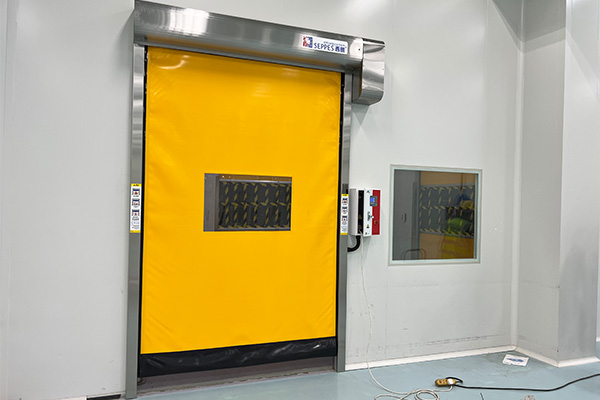
Food grade high speed doors are designed to meet the hygiene, safety, and operational demands of food processing plants. Compared with standard industrial doors, they offer specialized materials, effective sealing, and automated operation to support cleaner and more efficient production environments.
Stainless Steel Frames and Easy-to-Clean Surfaces
Food processing environments often involve high humidity, frequent cleaning, and exposure to cleaning chemicals.
Hygienic high speed doors can be equipped with 304 stainless steel frames and smooth PVC curtains to improve corrosion resistance and simplify routine cleaning. Their easy-to-clean surfaces help reduce dirt accumulation and support hygiene maintenance.
Fast Opening and Automatic Closing
Frequent movement of workers, forklifts, and materials requires efficient door operation.
Food grade high speed doors typically operate at speeds of 0.8–1.5 m/s, depending on the model. Fast opening and automatic closing reduce unnecessary door-open time, helping limit air exchange, maintain temperature stability, and improve workflow efficiency.
Enhanced Sealing for Contamination Control
Effective sealing is essential for separating food production areas from surrounding environments.
High speed zipper doors feature interlocking side guides and bottom seals that help minimize gaps around the door curtain. This design reduces the entry of dust, insects, and airborne particles, supporting hygiene zoning and contamination control.
Touchless Operation and Safety Sensors
Touchless access helps reduce physical contact with door controls in hygiene-sensitive environments.
Food processing high speed doors can integrate radar sensors, pull-cord switches, and automatic activation systems. Photoelectric sensors and safety light curtains help detect obstacles and reduce the risk of collisions during operation.
Self-Repairing Curtain Design
Busy food production facilities often experience frequent forklift traffic, increasing the risk of accidental door impacts.
Self-repairing high speed doors feature flexible zipper curtains that can disengage from the side guides after certain accidental impacts and automatically reinsert during the next operating cycle. This helps reduce downtime, maintenance requirements, and production interruptions.
Washdown Resistance and Corrosion Protection
Food processing plants, especially meat, seafood, and dairy facilities, often require regular equipment and surface cleaning. Washdown high speed doors should be specified with corrosion-resistant materials, suitable electrical protection, and components compatible with the facility’s cleaning procedures. Stainless steel frames and properly protected control systems can improve durability in wet environments.
The required protection level depends on water exposure, cleaning pressure, and chemical concentration. Not all high speed doors are suitable for high-pressure washdown applications.
Types of High Speed Doors Used in Food Processing Plants
Different food processing environments require specific door solutions based on hygiene standards, cleaning frequency, temperature control, and traffic flow. Choosing the right high speed doors helps improve production efficiency while supporting food safety and contamination control.
Puertas enrollables de alta velocidad en PVC
PVC high speed doors feature flexible curtains and fast opening speeds, making them suitable for general food production and packaging areas.
- Rapid opening and automatic closing for frequent access.
- Smooth PVC curtains for routine cleaning.
- Suitable for packaging rooms, production corridors, and internal logistics passages.
Zipper High Speed Doors
Zipper high speed doors feature an interlocking side-guide system that provides enhanced sealing and a self-repairing function.
- Improved sealing helps reduce dust and airborne contamination.
- Self-repairing curtains minimize downtime after certain accidental impacts.
- Ideal for hygiene-sensitive production zones and high-traffic forklift passages.
Stainless Steel High Speed Doors
Stainless steel high speed doors typically combine corrosion-resistant stainless steel frames with flexible PVC curtains, making them suitable for humid food processing environments.
- Optional 304 stainless steel frames resist corrosion.
- Easy-to-clean surfaces support routine hygiene maintenance.
- Suitable for dairy processing, meat production, and other wet processing areas.
Insulated High Speed Doors
Insulated high speed doors are designed to reduce heat transfer and unnecessary air exchange between temperature-controlled areas.
- Insulated curtains or door panels improve thermal separation.
- Rapid operation helps reduce temperature fluctuations.
- Suitable for chilled food processing rooms, refrigerated warehouses, and cold storage passages.
Comparison of High Speed Doors for Food Processing
| Tipo de Puerta | Key Advantage | Mejor aplicación |
|---|---|---|
| Puerta Rápida de PVC | Fast access and cost-effective separation | Packaging and general production |
| Cremallera Puerta rápida | Enhanced sealing and self-repairing curtain | Hygienic zones and busy forklift passages |
| Stainless Steel High Speed Door | Corrosion-resistant frame options | Dairy, meat, and wet processing areas |
| Puerta de alta velocidad aislada | Improved thermal separation | Chilled processing and cold storage |
Selection Tip: For food processing plants, the best food hygiene doors depend on the operating environment. Standard PVC doors work well in general production areas, while zipper doors are preferred where improved sealing is required. Stainless steel configurations suit humid or frequently cleaned areas, and insulated doors are better suited to temperature-controlled facilities.
How to Choose the Right Food Grade High Speed Door
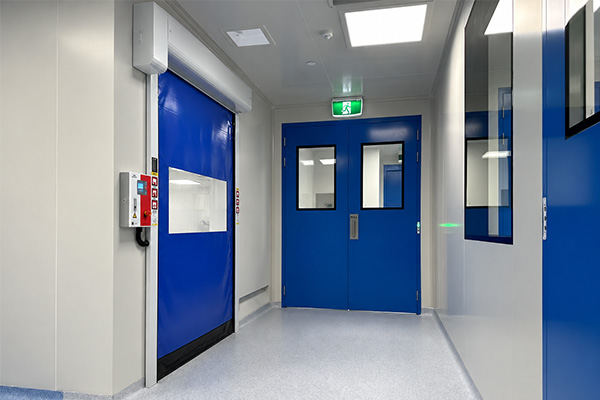
Choosing the right food grade high speed door requires more than considering opening speed and price. Food processing plants must evaluate hygiene requirements, cleaning conditions, temperature control, and daily traffic to ensure reliable performance and long-term efficiency.
Evaluate Hygiene and Cleaning Requirements
Different food production areas have different hygiene requirements. Meat, dairy, and seafood processing facilities often involve high humidity, frequent washing, and exposure to cleaning chemicals.
- Identify whether the door will be installed in a dry or wet processing area.
- Confirm cleaning frequency, water pressure, and chemical exposure.
- Consider enhanced sealing for areas requiring stricter contamination control.
For frequently washed environments, choose food hygiene doors with suitable corrosion protection and cleaning-compatible components.
Choose Suitable Frame and Curtain Materials
Door materials directly affect durability, cleaning efficiency, and maintenance requirements.
- 304 stainless steel frames: Suitable for many humid and frequently cleaned food processing areas.
- PVC curtains: Provide flexible operation and smooth, easy-to-clean surfaces.
- Enhanced sealing systems: Help reduce dust, insects, and unwanted air movement.
For highly corrosive environments, such as facilities exposed to salt or aggressive cleaning chemicals, additional material protection or 316 stainless steel may be necessary.
Consider Door Size and Traffic Frequency
Frequent forklift movement requires high speed doors that operate efficiently without interrupting production.
Before selecting a door, confirm:
- Clear opening width and height.
- Daily opening and closing frequency.
- Forklift dimensions and traffic direction.
- Available installation space and power supply.
For busy logistics passages, automatic radar activation, safety sensors, and self-repairing zipper curtains can help improve efficiency and reduce downtime.
Assess Sealing and Temperature Control
Effective sealing is important for maintaining separation between food production zones and reducing unnecessary air exchange.
- Packaging areas: Standard PVC high speed doors may provide sufficient separation.
- Hygiene-sensitive processing zones: Zipper high speed doors offer improved side sealing.
- Refrigerated areas: Insulated high speed doors help reduce heat transfer and temperature fluctuations.
For cold storage applications, also evaluate condensation, frost formation, and the temperature difference between connected areas.
Check Safety Features and Maintenance Requirements
Food processing plants need reliable door systems that support both worker safety and continuous production.Look for practical features such as photoelectric sensors, safety light curtains, emergency opening options, and accessible maintenance components.
The self-repairing PVC curtain can also reduce repair-related downtime in high-traffic areas where accidental forklift impacts may occur.
What Information Should You Provide When Requesting a Quote?
To select suitable food grade high speed doors, provide the manufacturer with the following project details:
| Required Information | Details to Provide |
|---|---|
| Door opening size | Width × Height (mm) |
| Aplicación | Meat processing, dairy, packaging, cold storage, etc. |
| Operating temperature | Indoor and outdoor temperatures |
| Cleaning requirements | Dry cleaning, low-pressure washing, or high-pressure washdown |
| Traffic conditions | Personnel, forklifts, or automated equipment |
| Material del marco | Painted steel, 304 stainless steel, or other requirements |
| Activation method | Radar, pull cord, remote control, or automatic system |
Food Grade High Speed Doors vs Standard Industrial Doors
| Comparison | Food-Grade-Oriented Configuration | Puerta Industrial Estándar |
|---|---|---|
| Material del Marco | Stainless steel option | Painted or galvanized steel |
| Cleaning | Designed around specified hygiene and cleaning needs | General cleaning requirements |
| Sellado | Enhanced sealing options | Standard sealing |
| Operación | Rapid, automated | Varies by door type |
| Hygienic Zoning | Suitable when correctly specified | May be less suitable |
| Coste | Typically higher for specialized configurations | Depends on model |
Preguntas frecuentes
What makes a high speed door suitable for food processing?
Food grade high speed doors are designed to support hygiene, contamination control, and efficient access in food processing facilities. Key features include easy-to-clean PVC curtains, corrosion-resistant frames, effective sealing systems, and automatic operation. The right configuration depends on the facility’s hygiene requirements, cleaning procedures, and operating conditions.
Are food grade high speed doors suitable for washdown areas?
Yes, specially configured washdown high speed doors can be used in food processing areas that require frequent cleaning. Stainless steel frames, moisture-resistant components, and properly protected electrical systems are important. However, suitability for high-pressure washing depends on the door’s IP protection rating, sealing design, and compatibility with cleaning chemicals.
Do food grade high speed doors meet HACCP requirements?
Food hygiene doors can support HACCP-based food safety management by helping control contamination risks and maintain separation between processing zones. However, HACCP does not require one specific door type. Compliance depends on the facility’s overall food safety management system, hygiene procedures, and applicable regulations.
Are stainless steel high speed doors necessary for food factories?
Not all food processing areas require stainless steel doors. Standard PVC high speed doors may be suitable for dry packaging and general production areas. For humid environments, dairy processing, and frequent washdown applications, 304 stainless steel high speed doors offer improved corrosion resistance and easier hygiene maintenance.
How do high speed doors help prevent contamination in food processing plants?
High speed doors help reduce contamination risks by minimizing the time doorways remain open. Automatic closing, tight side seals, and bottom sealing systems help limit the entry of dust, insects, and airborne particles. Touchless activation also reduces unnecessary contact with door controls.
Can food grade high speed doors be used in cold storage areas?
Yes, but the door must be suitable for the operating temperature. Insulated high speed doors help reduce heat transfer and air exchange in refrigerated areas. Freezer applications may require additional insulation, heating systems, and anti-frost protection to ensure reliable operation.
What information is needed to get a quote for food grade high speed doors?
To receive an accurate quotation, provide the door opening dimensions (width × height), application area, operating temperature, cleaning requirements, and expected traffic frequency. Additional details, such as stainless steel frame preferences, activation methods, and safety requirements, will help manufacturers recommend the most suitable high speed doors for food processing plants.

