

Deje de reemplazar sus puertas de granero dañadas: por qué las puertas de alta velocidad son la solución definitiva para el transportador de paletas de cadena
Si bien las puertas de granero han sido un elemento básico del diseño industrial durante décadas, nunca fueron diseñadas para soportar el ritmo implacable y la precisión automatizada de los sistemas modernos de manejo de materiales. El daño constante no es solo mala suerte: es un síntoma de una falta de compatibilidad en la infraestructura. Como gerente de instalaciones, probablemente haya visto los síntomas: rieles deformados, paneles doblados y los costos constantes y acumulativos de las reparaciones.
En este artículo, analizaremos por qué los sistemas de puertas convencionales son fundamentalmente incompatibles con los transportadores de paletas de cadena de alto tráfico. Más importante aún, presentaremos una alternativa de alto rendimiento diseñada para la era de la automatización: las puertas industriales rápidas. Esta puede transformar este punto crítico de falla en un activo sin interrupciones que proteja su equipo, su cronograma y sus resultados financieros.
“Las puertas de granero están diseñadas para aberturas estáticas, mientras que los transportadores de paletas requieren soluciones de puertas dinámicas, de alta velocidad e integradas para prevenir daños por impacto.”
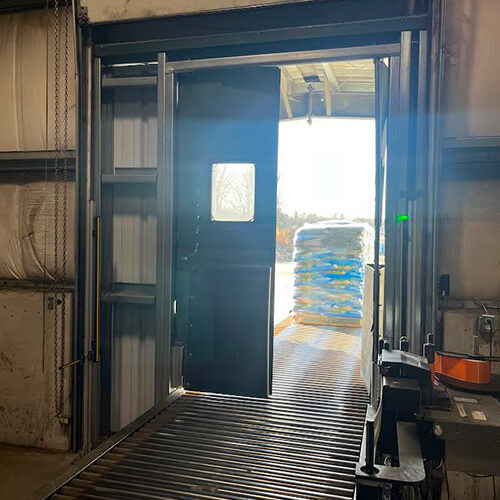
Análisis de Falla: Por Qué las Puertas de Granero Fracasan en Líneas de Transportador de Paletas de Cadena
Vulnerabilidad Estructural
Las puertas de granero tradicionales están hechas de materiales rígidos como madera o paneles de metal pesado. Están diseñadas para uso manual ocasional, no para la vibración constante y el movimiento de alta frecuencia de una línea de transportador.
El Resultado: Los rieles se doblan fácilmente, los rodillos se desalinean y los paneles de la puerta se abollan o deforman ante el más mínimo impacto, lo que lleva a una falla total del sistema.
Operación Lenta
Las puertas de granero se mueven sobre rieles pesados que dependen de la fricción, lo que hace que sus velocidades de apertura y cierre sean increíblemente lentas.
El Resultado: El transportador debe detenerse y esperar a que la puerta despeje la abertura. Esto crea un cuello de botella que reduce la cantidad de mercancías procesadas en toda su instalación.
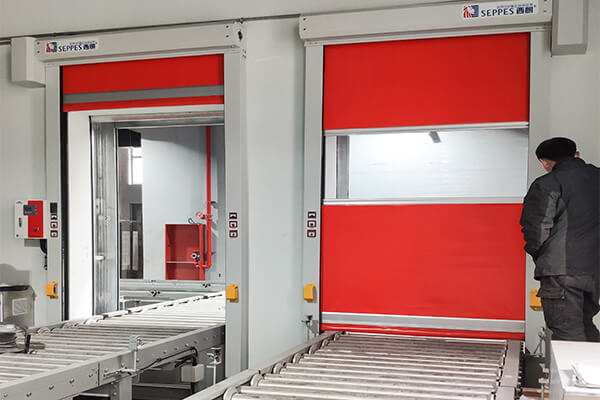
Puertas Rápidas de Rollo Industriales: La Alternativa Moderna para Sistemas de Transportador
A diferencia de las puertas estándar, las puertas de alta velocidad están diseñadas para soportar las exigencias rigurosas de las operaciones de manejo de materiales 24/7. Estos sistemas están específicamente diseñados para la automatización de alta frecuencia, proporcionando una interfaz duradera y eficiente para líneas de transportador de paletas.
Operación Rápida y Sincronización Precisa
La ventaja más inmediata de las puertas de alta velocidad es su velocidad. Mientras que una puerta de granero podría tardar de 10 a 15 segundos en deslizarse para abrirse, puerta de alta velocidad para transportador de paletas de cadenas operan a velocidades que oscilan entre 1.0 m/s y 2.0 m/s.
- Riesgo de Colisión Reducido: Al abrirse en una fracción de segundo, la puerta asegura que el camino esté despejado antes de que llegue la paleta.
- Tecnología VFD: Equipadas con Variadores de Frecuencia (VFD), estas puertas ofrecen una operación suave de “arranque suave y parada suave”, lo que previene sacudidas mecánicas y extiende la vida útil del motor y la cortina.
Tecnología Avanzada de Sello de Cepillo para Durabilidad
Mientras que algunos sistemas utilizan rieles tipo cremallera para auto-reparación, las puertas de alta velocidad diseñadas para entornos de transportador de servicio pesado a menudo utilizan una estructura robusta de sello de cepillo.
- Sellado Superior: Los cepillos de alta densidad que recubren los rieles laterales proporcionan un excelente sellado contra polvo, residuos y fluctuaciones de temperatura, lo cual es crítico para proteger mercancías sensibles en el transportador.
- Reducción de Fricción: La estructura de cepillo permite que la cortina se mueva suavemente dentro de las guías, reduciendo significativamente el desgaste durante operaciones de alto ciclo.
- Estabilidad: Las guías de cepillo reforzadas mantienen la cortina firmemente en su lugar contra la presión del aire o corrientes, asegurando que la puerta permanezca funcional en diversas condiciones de almacén.
Automatización Sin Interrupciones e Integración con PLC
Las puertas de alta velocidad funcionan como un componente integrado del sistema de transportador automatizado, en lugar de una barrera independiente.
- Conectividad PLC: Estas puertas pueden integrarse completamente con el Controlador Lógico Programable (PLC) del transportador. El transportador “se comunica” con la puerta, asegurando que se abra exactamente cuando sea necesario y se cierre inmediatamente después de que pase la paleta.
- Detección Inteligente: Utilizando radar, sensores fotoeléctricos o lazos de inducción, el sistema detecta paletas que se aproximan con una precisión del 100%, eliminando el error humano o los retrasos de sincronización asociados con las puertas de granero manuales.
Diseñadas para Entornos de Alto Ciclo
Las líneas de transportador de paletas a menudo operan miles de ciclos por día. Las puertas de alta velocidad están construidas para soportar este volumen:
- Materiales de Servicio Pesado: Utilizando PVC de alta resistencia o tejidos reforzados, estas cortinas son resistentes a las abrasiones menores comunes en entornos industriales.
- Mantenimiento Mínimo: Al reemplazar el complejo hardware deslizante con un diseño simplificado de enrollado y sellos de cepillo, se reduce el número de piezas móviles. Esto conlleva costos de mantenimiento significativamente más bajos y menos reparaciones de emergencia.
Reemplazar las puertas de granero dañadas con un sistema de puerta de alta velocidad con sello de cepillo transforma un dolor de cabeza recurrente de mantenimiento en un activo optimizado. Al priorizar la velocidad, la integración y la durabilidad de grado industrial, las instalaciones pueden proteger su equipo, sus productos y sus resultados financieros.
Análisis Comparativo: Puertas de Granero de Almacén vs. Puertas de Alta Velocidad para Sistemas de Transportador
Al evaluar el rendimiento de su transportador de pallets de cadena, la diferencia entre una partición estándar y una solución automatizada es significativa. Esta comparación destaca por qué las puertas rápidas especializadas son la opción superior para entornos de alto tráfico.
| Característica | Puertas de Granero Tradicionales | Puertas Rápidas SEPPES | Impacto en las Operaciones |
| Velocidad de Apertura | 0,1 – 0,2 m/s; deslizamiento manual o motorizado lento. | 0,8 – 1,5 m/s; apertura vertical rápida. | Elimina el tiempo de espera del transportador y los cuellos de botella. |
| Durabilidad | Paneles rígidos que se abollan o deforman ante impactos. | Cortinas flexibles de PVC de alta resistencia. | Absorbe impactos menores sin deformación permanente. |
| Integración | Independiente; sin comunicación con el transportador. | Lógica completa de PLC, Radar y Bucle de Inducción. | Sincroniza el movimiento de la puerta con la llegada del pallet. |
| Sistemas de Seguridad | Topes mecánicos básicos o inexistentes. | Fotocélulas infrarrojas y bordes de seguridad inalámbricos. | Previene accidentes y protege la carga costosa. |
| Mantenimiento | Alta; reparaciones frecuentes de rieles y rodillos. | Baja; cuenta con rieles de cremallera “auto-reparables”. | Reduce el tiempo de inactividad no programado y los costos laborales. |
| Vida Útil de Ciclos | Limitada a menos de 50,000 ciclos totales. | Diseñada para más de 1,000,000 de ciclos. | Garantiza un Costo Total de Propiedad (TCO) mucho menor. |
| Calidad de Sellado | Deficiente; grandes espacios permiten fugas de polvo y aire. | Sellos ajustados de cepillo o cremallera en todos los lados. | Mantiene zonas de sala limpia o con temperatura controlada. |
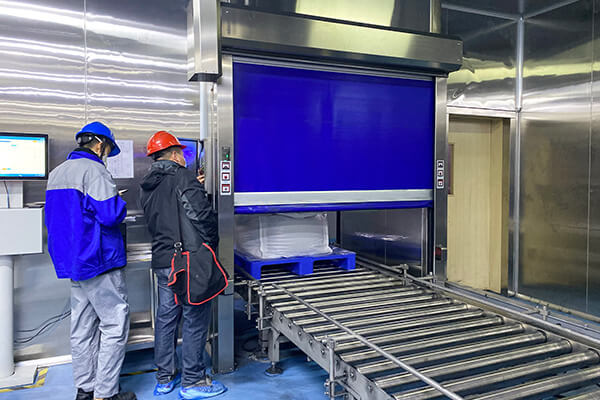
¿Cómo Elegir la Puerta Rápida Adecuada para su Transportador?
Elegir la puerta rápida adecuada para un sistema de transporte de pallets es una decisión técnica que impacta el rendimiento de su instalación y los costos de mantenimiento a largo plazo. Debido a que los transportadores operan en una ruta fija con sincronización automatizada, la puerta debe ser más que una simple barrera—debe ser una parte integrada de la máquina.
A continuación, se explica cómo seleccionar las puertas rápidas adecuadas para transportadores de pallets de cadena en su almacén:
Selección de Material (PVC vs. Aluminio)
El material de la cortina debe elegirse según el entorno específico de su instalación y el tipo de mercancías transportadas:
- Cortinas de PVC Reforzado: Son el estándar de la industria para la mayoría de los transportadores de pallets. El PVC es ligero, lo que permite velocidades de apertura máximas. Es ideal para el control de polvo y la separación de diferentes zonas del almacén. Su flexibilidad también significa que puede soportar la presión del viento sin deformación permanente.
- Puertas de Lamas de Aluminio: Si su transportador conecta una línea interior con un muelle de carga exterior o un área de alta seguridad, el aluminio es la mejor opción. Ofrece un aislamiento superior (ideal para aplicaciones de cadena de frío ) y un alto nivel de seguridad contra entrada forzada. Sin embargo, las puertas de aluminio son más pesadas y suelen tener una velocidad de ciclo ligeramente menor que las de PVC.
Tipos de Sensores: ¿Radar, Cable de Tracción o Fotoeléctrico?
- Sensores Fotoeléctricos (Foto-celdas): Esta es la opción más recomendada para líneas automatizadas. Al montar los sensores directamente en el marco del transportador, la puerta recibe una señal en el momento en que un pallet alcanza un “punto de activación” específico, garantizando una sincronización perfecta.
- Radar (Sensores de Movimiento): Ideal para detección de área amplia. Aunque es excelente para montacargas, el radar a veces puede ser “demasiado sensible” para líneas de transporte estrechas, pudiendo activar la puerta por el tránsito de peatones cercanos.
- Cable de tracción: Este es un respaldo manual. En un sistema de paletización totalmente automatizado, los cables de tracción generalmente se evitan, ya que requieren un operador humano, lo que contrarresta el propósito de un transportador automatizado.
- Lazos de inducción: Ideales si sus pallets son movilizados por AGV (Vehículos de Guiado Automático) o montacargas después de salir del transportador, ya que detectan la masa metálica del vehículo.
Requisitos del motor para uso continuo de alta frecuencia (24/7)
Una puerta para transportador puede realizar cientos o incluso miles de ciclos al día. Un motor comercial estándar se quemará bajo estas condiciones.
- Servomotores con variadores de frecuencia: Busque motores equipados con Variadores de Frecuencia (VFD). Estos permiten que la puerta arranque y se detenga suavemente, reduciendo el estrés mecánico en los componentes.
- Ciclo de servicio continuo: Asegúrese de que el motor esté clasificado para “servicio continuo”. Para líneas de paletización de alto volumen, necesita un motor que pueda soportar más de 2,000 ciclos por día sin sobrecalentarse.
- Clasificación IP65: Si su transportador se encuentra en un entorno de lavado (como procesamiento de alimentos) o en un almacén con polvo, asegúrese de que el motor tenga una alta clasificación IP para protegerlo contra la entrada de agua y partículas.
Estructura de cremallera vs. estructura de cepillo
Comprender el diseño de la pista es esencial para gestionar posibles daños por impacto.
- Estructura de cepillo: Este diseño utiliza cepillos industriales de alta densidad en las guías laterales. Proporciona un sellado excelente y es increíblemente robusto y silencioso. Es la opción preferida para líneas de transporte donde la precisión es alta y el riesgo de impacto directo es moderado. La estructura de cepillo es altamente duradera y ofrece una gran resistencia al viento y la presión.
- Estructura de cremallera (autorreparable): Las puertas de cremallera cuentan con una barra inferior flexible con peso y un sistema de “dientes” en las pistas. Si un pallet golpea la puerta, la “cremallera” se libera para evitar que la cortina se rasgue y luego se autorrepara al reinsertarse en la pista en el siguiente ciclo.
- La elección: Elija Cremallera si sus pallets son inestables o si tiene un historial de colisiones frecuentes. Elija Cepillo si prioriza un sellado superior, durabilidad de la pista a largo plazo y un movimiento de puerta más rígido y estable.
Beneficios clave de las puertas rápidas de enrollar: cómo la actualización mejora su transportador de pallets en almacén
Invertir en puertas rápidas de enrollar de alta velocidad no se trata solo de reemplazar una barrera física; se trata de optimizar todo su ecosistema de manejo de materiales. Para instalaciones que operan transportadores de pallets automatizados, la transición de puertas tradicionales tipo granero a sistemas rápidos tiene un impacto medible en los resultados finales.
Reducción del tiempo de inactividad
En un almacén de alto volumen, el tiempo es literalmente dinero. Las puertas tradicionales suelen ser el “eslabón débil” en un sistema de transporte, requiriendo paradas frecuentes para realineación de pistas o reparación de hardware.
- Reducción drástica de fallas: Al cambiar a puertas de alta velocidad con guías selladas con cepillo o pistas especializadas, las instalaciones pueden reducir el tiempo de inactividad relacionado con mantenimiento hasta en un 80%.
- Longevidad predecible: A diferencia de las puertas tipo granero que sufren fatiga estructural, las puertas rápidas de enrollar están clasificadas para cientos de miles de ciclos.
Seguridad mejorada (protección de personal y activos)
Las líneas de transporte son zonas de alto riesgo para accidentes laborales. Las puertas rápidas de enrollar sirven como una partición de seguridad esencial entre maquinaria de alta velocidad y el personal del almacén.
- Prevención de atrapamiento: Una puerta rápida cerrada actúa como una barrera física, evitando que los empleados pisen o alcancen accidentalmente una línea de transporte de pallets activa, reduciendo significativamente el riesgo de lesiones por atrapamiento o aplastamiento.
- Cortinas de luz de seguridad infrarrojas: Las puertas rápidas modernas con Cortinas de luz infrarrojas avanzadas. Estos sensores sin contacto crean una densa rejilla de haces de luz a través de la abertura. Si se detecta cualquier obstrucción (un paquete suelto o la mano de un trabajador), la puerta se detiene y revierte instantáneamente, evitando tanto lesiones humanas como daños al producto.
- Cumplimiento normativo: La implementación de estos sistemas ayuda a las instalaciones a cumplir con estrictas normas de OSHA y estándares de seguridad industrial, reduciendo la responsabilidad legal y mejorando la cultura general de seguridad en el almacén.
Productividad mejorada
Una línea de transporte es tan rápida como su punto más lento. Las puertas tradicionales a menudo crean “atascos de tráfico” porque no pueden reaccionar con la suficiente rapidez a la llegada de un palé.
- Flujo de material fluido: Las puertas de alta velocidad eliminan el ciclo de “parar y esperar”. Debido a que se abren a velocidades de hasta 1,5 m/s y se integran directamente con el PLC del transportador, la puerta está completamente retraída antes de que el palé siquiera alcance el umbral.
- Integración sin interrupciones: Al eliminar el cuello de botella en la abertura de la puerta, se permite que el transportador funcione a su velocidad máxima de diseño. Esto garantiza un flujo de mercancías suave y continuo desde la producción hasta el muelle de carga.
- Control ambiental: En entornos con temperatura controlada o salas limpias, la velocidad de estas puertas minimiza el intercambio de aire. Esto significa que su instalación mantiene su clima interno sin ralentizar el movimiento de los palés, asegurando que la productividad nunca se logre a expensas del control de calidad.
Conclusión: Invertir en fiabilidad
Actualizar la infraestructura de su instalación es más que simplemente reemplazar un componente dañado. Como hemos analizado, la falla frecuente de las puertas de granero tradicionales en líneas de transporte de palés no es meramente un problema de mantenimiento—es un desajuste fundamental entre hardware obsoleto y la automatización moderna.
Al realizar la transición a un sistema de puertas de alta velocidad para transportadores de palés de cadena, está sincronizando su flujo de trabajo para garantizar que su transportador y su puerta operen como una unidad única y armoniosa. Asegurando el futuro de su instalación con tecnología capaz de manejar las demandas de ciclos elevados de una cadena de suministro cada vez más automatizada.
Reflexión final:
“No permita que una puerta obsoleta frene su sistema de transporte moderno. Actualice a la fiabilidad de alta velocidad y mantenga su negocio avanzando.”

