
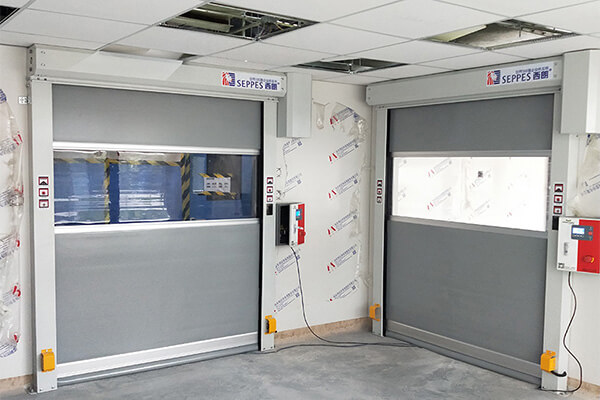

Rapid Rise Door in Armenian: Precision Control in Electronics Manufacturing
In electronics manufacturing, where the margin for error is tiny, the production environment is just as critical as the components. Maintaining a sterile, climate-controlled facility requires more than just high-end HVAC systems; it requires a sophisticated barrier that facilitates rapid movement without compromising internal air pressure or thermal stability. This article delves into how a rapid rise door serves as the heartbeat of electronics manufacturing solution, specifically tailored for the rigors of the Armenian tech sector.
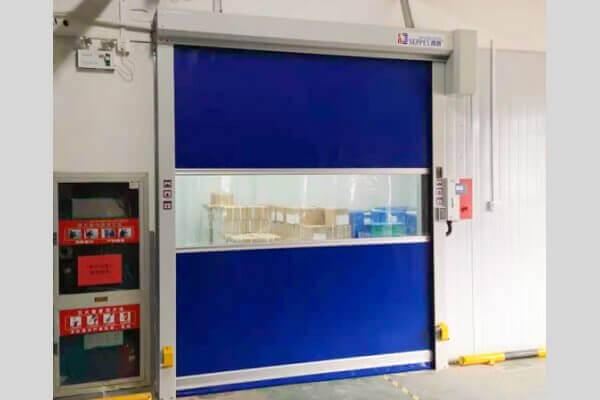
Navigating the Challenges of Electronics Manufacturing in Armenia
Climate Extremes
Armenia’s continental climate presents a significant hurdle for high-tech production, as temperatures swing from intense summer heat to freezing winter lows. Electronics assembly, particularly semiconductor work, requires a strictly controlled and stable internal environment. Fluctuating temperatures can cause sensitive materials to expand or contract, leading to micro-fractures or failures. Maintaining this stability is difficult when exterior doors are opened, allowing extreme outside air to disrupt the facility’s climate.
Dust and Pollutant Shielding
In electronics manufacturing, even microscopic particles can cause catastrophic defects in Printed Circuit Boards (PCBs). Armenia’s geographic environment can be prone to dust and external pollutants. To ensure product reliability, facilities must implement a barrier that prevents these airborne contaminants from entering sensitive production zones. Without high-performance sealing at entry points, dust can settle on components, resulting in short circuits or reduced product lifespans.
High Frequency Logistics
A modern electronics plant relies on the constant movement of raw materials and finished goods. This creates a conflict: the need for fast access between the loading bay and the cleanroom versus the need to keep the facility sealed. Every time a door opens, the facility’s “thermal envelope” is compromised.
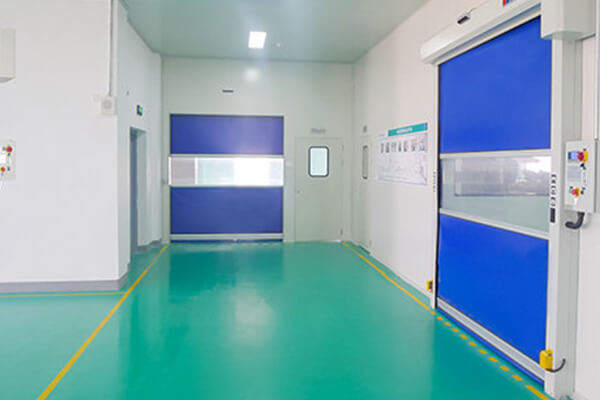
Rapid Rise Door: Protecting the Cleanroom Envelope with High Speed Access
Maintaining Pressure Differentials with Fast-Acting Doors
In ISO-rated cleanrooms, maintaining positive air pressure is essential to ensure that air always flows out of the room, preventing dust from entering. A Rapid Rise Door acts as a critical control valve in this environment. By rapidly restoring the seal, the door helps the facility’s ventilation system maintain the strict pressure gradients.
Air Infiltration Reduction through Rapid Rise Technology
Every time a door opens during high-frequency traffic, external humidity and contaminants threaten to invade the production floor. A Rapid Rise Door is engineered to limit this air exchange through speed and superior sealing technology. By opening and closing in a matter of seconds, it creates a much smaller “window of vulnerability” compared to traditional doors. This drastically reduces the infiltration of unconditioned air, which is vital for protecting sensitive electronic components from moisture-related damage and oxidation.
Material Integrity
In high-tech manufacturing, the equipment itself must not become a source of contamination. Rapid roller door models designed for electronics environments offer specialized material options, such as anti-static (ESD) and non-shirring curtains. These materials are specifically engineered not to shed particles or generate static electricity during operation. This ensures that even during rapid movement, the door maintains the integrity of the cleanroom while serving as a high-performance component of a broader Loading Dock Solution.
Which Type Of Industrial Rapid Doors Are Used In Armenian Electronic Manufacturing Plants
Rapid Rise Doors (高速织物门)
These are the most critical doors in an electronics plant due to their opening speeds (up to 2.0m/s) and ability to handle high-frequency traffic.
- Main Application Locations:
- Internal Inter-departmental Corridors: Between the raw material warehouse and the production floor to maintain temperature stability.
- AGV & Forklift Routes: Automated paths where sensors trigger the door to open and close instantly for seamless logistics.
- Buffer Zones / Airlocks: Positioned between the loading dock and the sterile production area to prevent external dust from entering.
Cleanroom High-Speed Doors
A specialized version of the zipper rapid door, these are designed with non-shirring (non-shedding) materials and high-airtightness seals to meet ISO cleanroom standards.
- Main Application Locations:
- Cleanroom Entrances: Entry points to semiconductor assembly or PCB SMT (Surface Mount Technology) lines.
- Pressure-Controlled Zones: Areas where positive air pressure must be maintained to keep pollutants out.
- Material Pass-Throughs: Smaller versions used for moving components between different cleanliness-rated zones.
Insulated Sectional Doors
These doors consist of sandwich panels filled with high-density polyurethane foam, offering superior thermal insulation and physical security.
- Main Application Locations:
- External Loading Bays: Used as the primary exterior door for the facility to provide security and weather protection during non-operational hours.
- Finished Goods Warehouses: Areas where bulk products are stored before shipment and require stable temperatures.
- Facility Perimeter: Any opening that interfaces directly with the outside environment and requires a high R-value (thermal resistance).
PVC Impact / Swing Doors
These are flexible, double-acting doors that allow personnel or light carts to push through easily.
- Main Application Locations:
- Packaging Areas: Non-critical zones where goods are boxed and labeled.
- Employee Transition Zones: Between the changing rooms (where “bunny suits” are donned) and the secondary corridors.
- Utility & Maintenance Rooms: Areas with low cleanliness requirements but high pedestrian traffic.
Comparison of Industrial Doors for Electronics Manufacturing
| Door Type | Brief Description | Primary Benefit | Common Application Location |
| Rapid Rise Door | High-speed fabric door with rapid opening/closing cycles. | Minimizes air exchange and maintains internal temperature. | Internal corridors, AGV routes, and high-traffic logistics zones. |
| Cleanroom High-Speed Door | Specialized high-speed door with non-shedding and airtight seals. | Maintains positive air pressure and prevents dust contamination. | Entrances to ISO-rated cleanrooms and PCB assembly lines. |
| Insulated Sectional Door | Heavy-duty door made of foam-filled sandwich panels. | Superior thermal insulation (High R-value) and building security. | External loading bays and finished goods warehouses. |
| Fire-Rated Industrial Door | Reinforced door designed to resist and contain fire for a set duration. | Ensures personnel safety and prevents fire spread. | Chemical storage rooms and fire-containment walls. |
| PVC Impact / Swing Door | Flexible, double-acting door that opens upon physical contact. | Cost-effective and allows hands-free pedestrian or cart access. | Packaging areas, locker rooms, and low-cleanliness utility zones. |
Electronic Manufacturing Area & Common Industrial Rapid Rise Doors
| Area | Common Industrial Doors |
|---|---|
| 生产车间 | PVC High-Speed Door |
| Dust-Free Workshop | Cleanroom Fast Door |
| Workshop Aisle | PVC High-Speed Door |
| Warehouse Entrance | Industrial Sectional Door |
| Loading & Unloading Area | Sectional Door + Dock Leveler |
| Main Factory Entrance | Aluminum Alloy High-Speed Door |
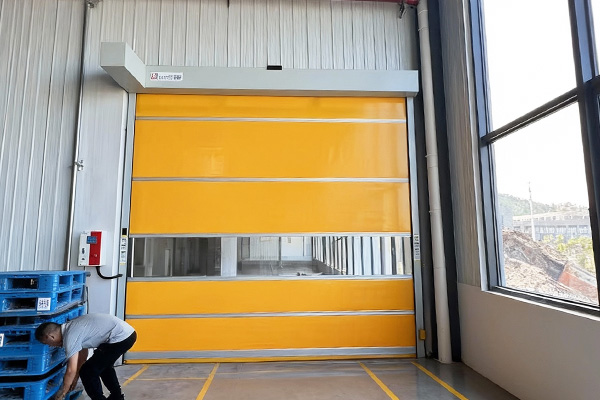
Energy Efficiency and Operational ROI in the Armenian Tech Sector
Combating High Energy Costs
In Yerevan, where electricity costs represent a significant overhead for manufacturers, a Rapid Rise Door serves as a vital energy-saving tool. By opening and closing at speeds up to 2.0m/s, these doors reduce the time a facility is exposed to external air by up to 80% compared to standard industrial doors. This drastically lowers the workload on HVAC and specialized cooling systems, as they no longer need to constantly work to compensate for massive thermal loss. For a typical electronics plant, this efficiency can translate into a 20% to 30% reduction in monthly electricity consumption.
Improving Logistics Throughput
Operational speed is a cornerstone of return on investment (ROI). In high-volume assembly environments, traditional slow-moving doors create bottlenecks that stall the flow of materials. By integrating automated sensors—such as radar, infrared, or induction loops—with a Rapid Rise Door, forklifts and Automated Guided Vehicles (AGVs) can pass through entryways at full speed without stopping. This seamless, hands-free operation eliminates idle time, reduces congestion at the loading bay, and significantly increases daily production capacity.
Regulatory Compliance for Export
To compete in global markets, Armenian electronics firms must adhere to strict EAEU (Eurasian Economic Union) and International Quality Standards (such as ISO 9001). These regulations require manufacturers to provide a strictly controlled environment for component assembly. Using high-speed doors ensures that temperature, humidity, and air purity levels remain within required tolerances. Maintaining this level of environmental integrity is a mandatory requirement for securing export certifications and meeting the high-quality benchmarks demanded by international partners.
Choosing the Right Rapid Rise Door for Your Facility
Key Factors to Consider for Selecting Rapid Roller Doors
| Factor to Consider | Technical Description | Impact on Electronics Manufacturing |
| Operating Speed | Opening and closing velocities typically ranging from 1.0m/s to 2.5m/s. | Minimizes open time to maintain cleanroom air pressure and prevent thermal loss. |
| Material Composition | Options include reinforced PVC, anti-static (ESD) fabrics, or non-shirring materials. | Prevents static discharge and ensures no particles are shed into sterile production zones. |
| Sealing Integrity | High-performance side tracks and bottom seals designed for airtightness. | Blocks the ingress of external dust, humidity, and airborne pollutants from the Armenian environment. |
| Cycle Durability | High-intensity ratings often exceeding 100,000 to 500,000 cycles per year. | Ensures long-term reliability in 24/7 high-traffic logistics and assembly areas. |
| Safety Systems | Integrated infrared light curtains, motion sensors, and emergency stop functions. | Protects personnel and expensive electronic inventory from impact during rapid transit. |
| Activation Methods | Utilization of radar, floor induction loops, or remote AGV (Automated Guided Vehicle) links. | Enables seamless, touchless logistics flow to increase daily production throughput. |
| Wind Resistance | Structural reinforcement such as lateral wind bars or heavy-duty tracking systems. | Maintains door stability and sealing performance in high-altitude or gusty regions of Armenia. |
| Maintenance Features | Self-repairing “break-away” curtains that reset automatically after accidental impact. | Reduces operational downtime and repair costs caused by minor forklift collisions. |
Top Manufacturers of High-Speed Doors
Investing in a Rapid Rise Door from a globally recognized manufacturer ensures long-term reliability and access to specialized parts. Leading brands in the industry include:
- Hörmann: Known for German-engineered precision and high-cycle durability.
- Assa Abloy: A pioneer in high-speed door technology with specialized cleanroom models.
- Rytec: Offers high-performance doors with advanced safety features and rapid repair capabilities.
- SEPPES DOOR: High-performance industrial doors and loading dock equipment manufacturer, with export experience to 75 countries.
Customization Options for Specific Needs
A standard door may not be sufficient for the unique demands of an electronics plant. Key customization options include:
- Vision Panels: Large, clear windows integrated into the door curtain to improve safety by allowing forklift operators to see oncoming traffic.
- Wind Resistance Features: Reinforced lateral tracks and wind-weighted bars, which are particularly important for Armenian facilities located in high-altitude or gusty regions.
- Actuation Systems: Choosing between radar sensors, floor induction loops, or remote control to allow for hands-free movement of AGVs and heavy equipment.
- Interlock Logic: Programming the door to function as part of a dual-door airlock system, ensuring that the internal Rapid Rise Door and the external Insulated Sectional Door are never open at the same time.
结论
For facilities operating within the unique climate of Armenia, the implementation of a high-performance Rapid Rise Rolling Door is not merely a convenience—it is a strategic necessity for maintaining the sterile, temperature-stable conditions required for semiconductor and PCB assembly.
FAQs
High speed door: What is a high-performance rapid opening door?
A high speed door is a high-performance door solution designed for rapid opening and closing to enhance workflow in industrial settings. These doors—often fabric roll up doors, PVC rapid doors, or galvanized steel roller shutter doors—offer fast opening and closing, tight seal capability, and reliable operation for high-traffic areas. High-speed operation reduces time to open, minimizes air exchange, and improves overall temperature control for interior and exterior applications.
PVC rapid and fabric high speed roll: Are PVC fabric roll up doors suitable for indoor and outdoor use?
PVC rapid and fabric roll up doors are designed for both indoor and outdoor applications, providing rapid rolling door performance, weather resistance, and tight seal options. These doors are commonly used to enhance workflow between interior and exterior zones, offer easy access for personnel or equipment, and support rapid opening speeds that reduce energy loss and improve temperature control in areas like loading docks, production lines, and cold storage vestibules.
How do high-speed doors improve temperature control in freezer door applications?
Doors high speed reduce the time a freezer door or cold storage opening remains exposed by providing fast opening and closing, thereby minimizing air exchange and preserving set temperatures. Insulated high speed and tight seal designs prevent warm air infiltration, help maintain product integrity, and lower energy consumption. Rapid roll and rapid rolling door technology also decrease the number of opening and closing cycles needed to accomplish tasks, further stabilizing internal climates.
What is the best type of door for an electronics cleanroom in Armenia?
The most effective choice is a high-speed Rapid Roll Up Door specifically designed for cleanrooms. These doors feature non-shirring materials that do not shed particles and offer high-speed cycles to maintain positive air pressure. For Armenian facilities, ensuring the door has a high airtightness rating is essential to block external dust and mountain-region pollutants.
Are there specific ESD requirements for doors in electronics manufacturing?
Electronic components are highly sensitive to static discharge. Therefore, it is recommended to select a Rapid Rise Door with anti-static (ESD) curtain materials. These specialized fabrics prevent the buildup of static electricity during rapid movement, protecting sensitive PCBs and semiconductors from accidental damage.
External Resources and Industry Standards
ESD Association (EOS/ESD): Protection of Electrostatic Discharge Susceptible Items
The global authority on preventing static damage through proper facility design and material selection.
ISO 14644-1: Cleanrooms and Associated Controlled Environments
Learn about the international standards for air cleanliness and pressure differentials required in high-tech manufacturing.
EAEU Technical Regulations on Safety and Compliance
Access the official requirements for industrial equipment and safety certifications for products entering the Armenian and Eurasian markets.


 Chinese
  English
  Arabic
  German
  Spanish (Mexico)
  French
  Uzbek
Uzbek  Russian
  Japanese
  Korean
  Spanish (Peru)
  Spanish (Venezuela)
  Spanish (Ecuador)
  Spanish (Puerto Rico)