

Professional High Speed Door Installation: The Complete Industrial Guide to Efficiency and Compliance
Introduction
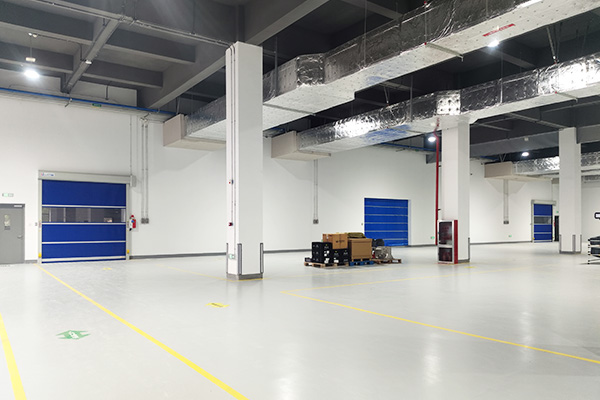
In an era where logistical efficiency and energy conservation dictate industrial success, the key in a facility is often found at the point of entry. For high-traffic environments, the difference between a seamless workflow and costly downtime depends on the precision of your high speed door installation.
While these advanced systems promise rapid cycles and enhanced climate control, their true potential is only unlocked through expert integration and meticulous calibration. A professional setup is not merely a mechanical task. It is a strategic investment in operational integrity and personnel safety. This guide serves as a definitive resource for facility managers and engineers, outlining the essential phases of a successful installation—from initial structural assessment to the fine-tuning of intelligent safety systems—ensuring your access solutions perform at peak capacity from day one.
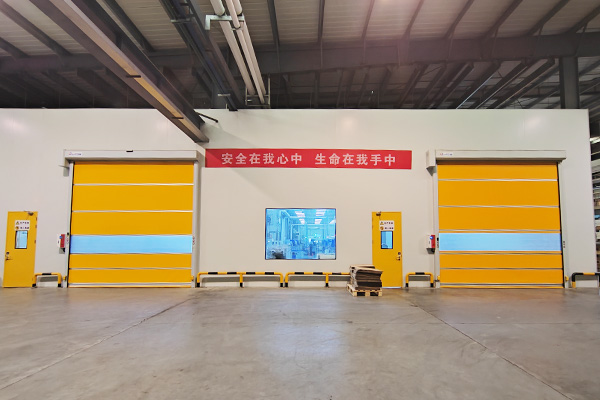
The Strategic Impact of High Speed Door Installation on Facility Operations
Operational Efficiency & Workflow Speed
High-speed doors open and close in seconds, allowing forklifts and personnel to move between zones without stopping or slowing down. This seamless transition eliminates traffic bottlenecks, reduces idle time for machinery, and ensures that the logistical flow remains consistent and productive throughout the day.
Climate Control and Energy Savings
By minimizing the time an opening is exposed to the outside environment, high-speed doors significantly reduce air exchange. This helps maintain stable internal temperatures in climate-controlled areas, such as cold storage or cleanrooms. Consequently, heating and cooling systems operate more efficiently, leading to a substantial reduction in monthly energy utility costs.
Safety and Risk Mitigation
Modern high-speed doors are equipped with advanced sensors and vision panels that improve visibility and prevent collisions. Their rapid operation reduces the window of time that a doorway remains an open hazard. Additionally, by effectively sealing off sections, they help control the spread of noise, dust, and airborne contaminants, creating a safer and healthier environment for employees.
Pre-Installation: Assessing Facility Requirements
Before beginning the installation, a thorough site assessment ensures the door operates reliably and safely.
Structural Integrity
The mounting walls and top headers must be strong enough to support the door’s weight and the constant vibrations caused by high-speed, high-cycle operation. If the structure is weak, it can lead to misalignment or mechanical failure over time.
Power Supply Verification
High-performance doors require a stable, dedicated power source. Fluctuating voltage is responsible for most control board failures. Verifying that the electrical supply matches the motor specifications is essential to protect the door’s electronic components.
Traffic Analysis & Activation Method Selection
The choice of sensors depends on how the opening is used. Radar sensors are ideal for detecting approaching forklifts from a distance, while floor loops (induction loops) detect metal vehicles specifically, preventing the door from opening for pedestrians. Proper analysis ensures the door only opens when necessary, preserving the internal climate.
Step-by-Step Guide to High Speed Door Installation
Step 1: Frame Assembly and Vertical Tracking Alignment
The foundation of any high-speed industrial door is its frame.
- Precision Alignment: Utilize laser alignment tools to ensure that the vertical tracks are perfectly parallel and plumb.
- Friction Reduction: Even a 2mm deviation can increase friction, leading to premature wear of the side seals and motor strain. Proper alignment ensures the curtain glides smoothly at high velocities.
Step 2: Installing the Door Curtain and Panel System
The curtain is the moving heart of the system, typically made from high-tenacity PVC fabric.
- Secure Mounting: Carefully unroll the PVC curtain and secure it to the top roller drum.
- Reinforcement: Ensure that all wind-resistant ribs (integral wind bars) are correctly seated within the curtain pockets. This allows the door to withstand pressure differentials within the facility.
Step 3: Motor Integration and Drive System Setup
The drive system facilitates the “rapid” nature of these doors.
- Mechanical Connection: Mount the high-torque motor to the drive shaft, ensuring all keys and set screws are tightened to industrial specifications.
- Limit Switch Calibration: Adjust the mechanical or digital limit switches to define the precise “fully open” and “fully closed” positions, preventing the curtain from over-traveling.
Step 4: PLC Programming and Velocity Calibration
Modern rapid doors rely on an intelligent PLC controller to manage complex movement cycles.
- Soft Start/Stop Technology: Program the frequency inverter to include soft start and soft stop ramps. This prevents mechanical jarring at the end of cycles, significantly extending the life of the motor and gearbox.
- Speed Adjustment: Calibrate the opening and closing speeds to match the specific traffic requirements of your facility.
Step 5: Safety Sensor and Light Curtain Testing
Safety is non-negotiable in High Speed Door Installation to protect personnel and equipment.
- Infrared Light Curtains: Install and align safety light curtains within the tracks to create a dense grid of protection.
- Wireless Safety Edges: Calibrate the safety bottom edge sensor; if the door encounters an obstruction during the closing cycle, it must instantly reverse to the open position.
- Final Compliance: Conduct multiple test cycles to ensure all sensors meet international industrial safety standards.
Comparing Door Types: Spiral, Roll-up, or Fold-up?
Spiral High Speed Doors: Best for Security and Exterior Use
En Spiral High Speed Door is the premium choice for external perimeters. Unlike fabric alternatives, these doors feature high-strength aluminum slats that roll into a unique spiral track, ensuring there is no metal-to-metal contact.
- Security: Provides a rigid, anti-theft barrier comparable to traditional rolling shutters but at much higher speeds (up to 2.5 m/s).
- Performance: Excellent for high-traffic exterior bays where wind resistance and weatherproofing are critical.
- Insulation: Often built with thermal-break slats to significantly reduce energy loss between indoor and outdoor zones.
Rapid Fabric Roll-up Doors: Best for Interior Cleanrooms and High-Traffic Bays
For internal separation, Rapid Fabric Roll-up Doors offer the most efficient and cost-effective solution. These are typically made from lightweight PVC or polyester fabric.
- Cleanroom Compatibility: Their airtight seals and smooth, easy-to-clean surfaces make them ideal for pharmaceutical and food-processing “clean zones.”
- Self-Repairing Technology: Many modern roll-up models feature a “breakaway” design. If a forklift hits the door, the curtain safely detaches and automatically resets into the tracks, eliminating downtime.
- Speed: Their lightweight nature allows for lightning-fast operation, maintaining air purity and stable internal environments.
High Speed Fold-up Doors: Best for Large Openings and High Wind Loads
When a facility requires a massive opening—such as a large warehouse entrance or a hangar bay—a Fold-up High Speed Door is often the preferred choice.
- Structural Integrity: Instead of rolling, these doors use lifting belts to fold the curtain into a stack at the top. This allows for horizontal reinforcement bars that provide superior wind resistance.
- Versatility: Ideal for exterior locations where a fabric door is needed for speed, but the environment is too windy for a standard roll-up model.
Specialized Option: Cold Storage High Speed Doors
In sub-zero environments, standard hardware will fail. Cold Storage High Speed Doors are engineered specifically for freezers and refrigerated warehouses.
- Specialized Insulation: These systems utilize double-curtain designs with an insulating air pocket or heated side rails.
- Anti-Frost Systems: Integrated heating elements prevent ice buildup on the tracks and seals, ensuring the door remains functional in temperatures as low as -30°C.
Comparison Table: Selecting the Right High Speed Door for Your Facility
| Door Type | Typical Opening Speed | Primary Use Case | Security Level | Key Technical Feature |
| Spiral High Speed Door | 1.5 – 2.5 m/s | Exterior bays, high-security zones | High (Aluminum Slats) | Contactless spiral tracking for quiet, low-wear operation. |
| Fabric Roll-up Door | 0.8 – 2.0 m/s | Interior partitions, cleanrooms, logistics | Low (PVC Fabric) | Self-repairing “breakaway” function after accidental impact. |
| Fold-up High Speed Door | 0.6 – 1.0 m/s | Large exterior openings, high-wind areas | Medium (Reinforced) | Horizontal wind-resistance bars for extreme weather durability. |
| Puerta frigorífica | 1.0 – 2.5 m/s | Freezers, refrigerated warehouses | Medium (Insulated) | Integrated heating elements and dual-layer insulated curtains. |
Common Challenges During High Speed Door Installation (and How to Avoid Them)
Navigating the complexities of an industrial site requires foresight. Here are the most frequent installation challenges and the professional strategies used to overcome them:
Challenge 1: Floor Irregularities and Gaps
An uneven floor is a common obstacle in older warehouses. Since rapid doors operate at high velocities, even a minor slope can prevent a perfect seal at the base, leading to energy loss and pest entry.
- The Solution: For minor irregularities, utilize an extra-thick, flexible bottom weather seal (EPDM gasket) that contours to the floor’s shape. If the deviation exceeds 10mm, professional floor leveling or a custom-fitted threshold plate is recommended to ensure a thermal and acoustic airtight seal.
Challenge 2: Electromagnetic Signal Interference
In modern industrial environments, the presence of heavy machinery, large metal structures, and high-frequency wireless networks can disrupt the sensors governing the door’s operation. This often leads to “ghost openings” or the failure of radar triggers.
- The Solution: Use shielded cabling for all control wiring to prevent Electromagnetic Interference (EMI). During the industrial door setup, technicians should calibrate sensor sensitivity levels and utilize frequency-hopping technology to isolate the door’s communication from other facility equipment.
Challenge 3: Improper Curtain Tensioning
If the PVC door curtain is not correctly tensioned during the initial setup, it may suffer from “telescoping” (uneven rolling) or excessive vibration during high-speed cycles. This is particularly problematic in areas with high wind loads or pressure differentials.
- The Solution: Carefully adjust the internal tensioning springs or counterweight systems according to the manufacturer’s torque specifications. Ensuring the curtain is perfectly centered on the drum prevents fabric “flutter” and reduces the mechanical load on the high-speed door motor, significantly extending the system’s service life.
Our professional installation team not only handles assembly but also provides precise parameter tuning. This includes fine-tuning the frequency converter for smooth start-up and shutdown, and optimizing sensor logic based on your warehouse’s actual personnel and material flow to ensure the doors only open when necessary.


 Spanish (Mexico)
  English
  Chinese
  Arabic
  German
  French
  Uzbek
Uzbek  Russian
  Japanese
  Korean
  Spanish (Peru)
  Spanish (Venezuela)
  Spanish (Ecuador)
  Spanish (Puerto Rico)