

PVC vs. Aluminum Rolling Shutter Door: The Ultimate Comparison for Industrial Warehouses
When upgrading your facility, the debate often boils down to two heavyweights: PVC rolling shutter door vs. aluminum rolling shutter. PVC rolling shutter doors are widely recognized for their high-speed operation, energy efficiency, and cost-effectiveness in high-traffic indoor environments. In contrast, aluminum rolling shutter doors are valued for their structural strength, durability, and superior exterior protection.
In this comprehensive 2026 guide, we break down the technical specifications, energy-saving capabilities, and long-term maintenance costs of both options. Whether you are managing a cold storage plant, a cleanroom, or a heavy-duty distribution center, this comparison will help you navigate the complexities of industrial door selection and ensure your workflow never stops.
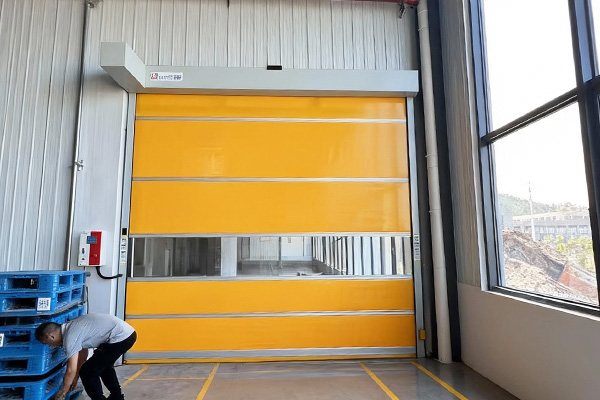
PVC Rolling Shutter Doors: Flexibility and Thermal Efficiency
PVC rolling shutter doors are lightweight, adaptable, and designed for environments where temperature control and budget are the primary concerns. Unlike metal doors, PVC focuses on providing a tight seal and excellent energy savings.
Key Characteristics of PVC Rolling Shutter Doors
| Feature | Technical Description |
| Slat Design | Double-walled with internal hollow air chambers for natural insulation. |
| Material Weight | Ultra-lightweight; minimizes strain on motors and manual lifting gear. |
| Impact Recovery | High flexibility; absorbs minor bumps without permanent denting or deformation. |
| Chemical Profile | 100% Rust-proof and resistant to salt, moisture, and most industrial acids. |
| Surface Finish | Non-porous and smooth; designed for easy cleaning and hygiene maintenance. |
| Operation | Silent movement due to the natural sound-dampening properties of polymer. |
The Benefits
- Superior Thermal Insulation: PVC is a natural non-conductor. It prevents heat from passing through the door, making it the best choice for keeping cold air inside a warehouse or preventing heat loss during winter. This significantly reduces energy bills in climate-controlled spaces.
- Corrosion Resistance: Because PVC is a high-grade plastic, it cannot rust. This makes it a reliable choice for coastal areas exposed to salt air or chemical storage facilities where metal doors would quickly corrode.
- Cost-Effectiveness: PVC is the most budget-friendly material for large-scale openings. It offers a professional, functional barrier.
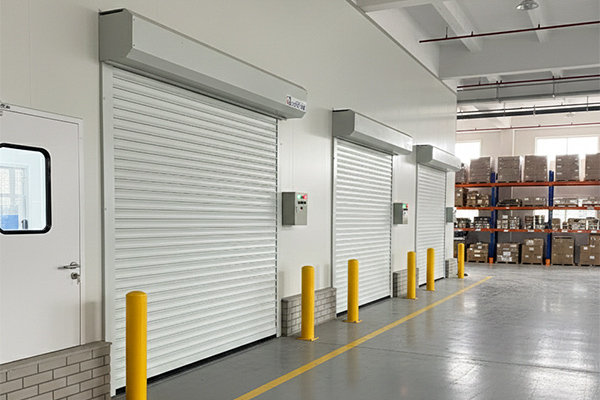
Aluminum Rolling Shutter Doors: The Standard for Security
Aluminum rolling doors are the industry standard for properties that require a balance of strength, long-term durability, and a professional appearance. While PVC focuses on insulation, aluminum is engineered for protection and structural stability.
Key Characteristics of Aluminum Rolling Shutter Doors
| Feature | Technical Description |
| Slat Variety | Available in extruded (maximum strength) or roll-formed (foam-filled) profiles. |
| Structural Integrity | High strength-to-weight ratio; remains rigid and stable across wide spans. |
| Surface Protection | Powder-coated finish resists UV fading, scratching, and environmental wear. |
| Security Level | Heavy-duty metal construction provides high resistance to forced entry. |
| Weather Resistance | Naturally corrosion-proof; maintains shape during extreme heat or cold. |
| Wind Stability | Rigid slats and reinforced guides prevent “blow-outs” in high-wind zones. |
The Benefits
- Maximum Security: Aluminum is significantly harder to break, cut, or force open than PVC. It provides a physical barrier that can withstand heavy impacts, making it the superior choice for preventing unauthorized entry.
- Structural Integrity: Unlike plastic doors that may sag or warp over time, aluminum remains rigid. It can cover much wider openings (such as large warehouse bays or double garages) without bending or blowing out of its side tracks during high winds.
- Premium Aesthetics: These doors feature a high-quality “powder-coated” finish. This protective layer ensures the door does not rust and resists fading from the sun (UV rays), maintaining a clean, professional look for years without the need for frequent repainting.
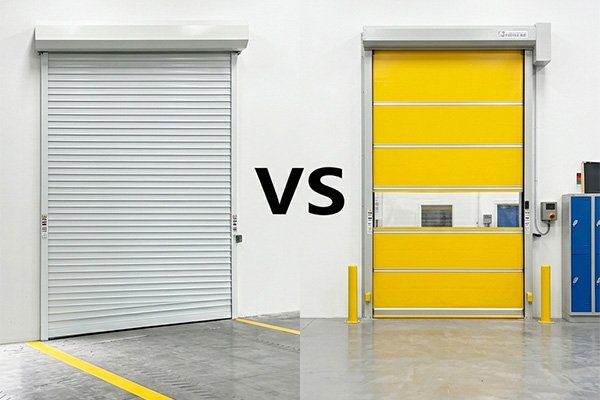
Technical Comparison: PVC vs. Aluminum Rolling Shutter Door
| Feature | PVC Rolling Shutter Door | Aluminum Rolling Shutter |
| Opening Speed | Ultra-fast (up to 2.0m/s) | Moderate (0.8 – 1.2m/s) |
| Frequency | High (500-2000 times/day) | Moderate (Standard industrial use) |
| Insulation | Better for air-tightness | Better for thermal & security |
| Security | Soft curtain (Low security) | Hard slat (High security/Anti-theft) |
| Initial Cost | Economical | Higher investment |
| Maintenance | Low cost, easy to replace | Higher repair cost if slats damage |
Material & Durability: Which Stand the Test of Time?
When choosing between a PVC rolling shutter door and an aluminum one, the decision depends on whether you prioritize operational flexibility or physical strength. Both materials are durable, but they are engineered for different challenges.
PVC Rolling Shutter Door: Flexibility for High-Traffic Areas
Die PVC rolling shutter door is the industry standard for internal areas with constant traffic. Its durability is defined by its resilience rather than its hardness.
- High Flexibility: The curtain is made of high-density polyester fiber. Unlike rigid doors, it can withstand thousands of cycles per day without metal fatigue.
- Self-Repairing Function: Rapid rolling doors usually adopt servo motors, and the opening speed can reach 0.8-1.5 m/s. They can complete opening and closing within a few seconds, significantly reducing waiting time. In contrast, conventional motors mostly drive aluminum rolling doors. The opening speed is typically around 0.1–0.3 m/s, making them more suitable for low-frequency entrances and exits or external protection areas.
Aluminum Rolling Shutter: Maximum Security & Weather Resistance
The aluminum rolling shutter is designed for the perimeter of a building where protection against the elements and intruders is the priority.
- High Strength & Security: Constructed from double-walled aluminum slats, these doors provide a formidable physical barrier. They are significantly harder to breach than PVC, making them ideal for preventing unauthorized access.
- Wind Load Resistance: Aluminum doors offer superior structural integrity. They can withstand high wind pressures (often rated Class 3-4), ensuring the building remains sealed and safe during extreme weather or storms.
Performance Under Pressure: Wind Load and Weather Resistance
Wind Resistance: Stability in Storms
- Aluminum (Safer Choice): Because aluminum is a rigid metal, it maintains its shape under heavy pressure. For large external openings or areas prone to high winds, aluminum doors stay securely in their tracks. They are far less likely to “blow out” or buckle during a storm.
- PVC: Being more flexible, PVC can bow or bend when hit by strong gusts. While fine for indoor use, it is generally not recommended for very wide outdoor openings in windy regions.
Our doors are engineered to meet strict international safety requirements, including the standard, which regulates the performance and safety requirements for industrial, commercial, and garage doors.
UV Stability: Sun Protection and Longevity
- Powder-Coated Aluminum: These doors feature a baked-on finish that acts as a shield against the sun. This “powder coating” is highly resistant to fading and prevents the metal from becoming weak or brittle, even after years of direct sunlight.
- Treated PVC: While modern PVC doors are treated with UV stabilizers to prevent yellowing, they are still a form of plastic. Over a very long period, intense sun exposure can cause PVC to lose some flexibility, making aluminum the longer-lasting choice for sunny exterior walls.
Noise Reduction: Blocking Street Sounds
- Aluminum (Winner for Noise): If your property faces a busy street, foam-filled aluminum slats are the superior choice. The combination of a metal shell and a dense foam core creates an excellent acoustic barrier that significantly muffles traffic and neighborhood noise.
- PVC: PVC provides decent sound dampening due to its hollow-chamber design, but it lacks the density of foam-filled metal. It is effective for quiet indoor partitioning but less effective at blocking loud, high-frequency outdoor sounds.
Maintenance and Long-term ROI (Return on Investment)
Maintenance Costs: PVC Rolling Shutter Door Repair vs. Aluminum
The maintenance profiles of these two doors differ significantly based on their reaction to accidental impacts, which are common in busy warehouses.
- PVC Rolling Shutter Door (Lower Repair Costs): Because the curtain is lightweight and flexible, it rarely sustains permanent structural damage. If the curtain is torn, replacing a single section or the entire fabric is relatively inexpensive and can often be done in a few hours. The self-repairing tracks further reduce the need for professional technician visits.
- Aluminum Rolling Shutter (Higher Repair Costs): While aluminum is stronger, it is less “forgiving.” If a vehicle hits an aluminum door, the metal slats or the spiral tracks can bend or dent. Repairing this usually requires replacing multiple specialized slats and realigning the heavy-duty track system, which involves higher material costs and specialized labor.
The Hidden Costs: Energy Consumption and Productivity Gains
- Productivity Gains: Die PVC rolling shutter door is designed for extreme speed (up to 2.5m/s). In a high-traffic facility, saving 10 seconds per passage across 50 forklift trips a day adds up to hours of saved labor every month. Faster cycles mean your logistics flow never stops.
- Energy Consumption: * PVC Doors: Their primary energy saving comes from speed. By opening and closing almost instantly, they minimize the “air exchange” between different zones, which is vital for temperature-controlled environments like cold storage.
- Aluminum Doors: Their energy saving comes from insulation. High-quality aluminum doors are often injected with PU foam, providing a thermal barrier that keeps heat out during the summer and warmth in during the winter when the door is closed.
Conclusion
In conclusion, PVC excels in heat insulation and cost-effectiveness, while aluminum alloy is superior in terms of strength and long-term durability. Before making the final decision, please make sure to comprehensively consider the climatic conditions at the installation location, the safety level requirements, and the long-term maintenance costs.
FAQs
What is a PVC roll up door and how does it differ from an aluminium roller shutter?
A PVC roller shutter is a roll-up door made from durable PVC fabric or PVC high speed material designed for commercial and industrial use, offering impact resistance, low-maintenance operation and better cleanliness in environments like workshops and food-processing areas. Compared with an aluminium roller shutter, PVC roller shutters are typically lighter, provide faster operation as pvc high speed doors or rapid roller doors, and can be insulated or clear for visibility. Aluminium shutters offer higher physical security and rigid protection for entrance doors, while pvc roller shutters excel in rapid roller shutter doors applications, smooth operation and ease of use.
Are aluminium shutters better than PVC shutters?
For External Security: Aluminium is better. It is tougher, lasts longer in direct sunlight, and stays stable in high winds. For Interior Climate Control: PVC is better. It provides superior thermal barriers and is more economical for temperature-controlled rooms.
Are pvc roller doors suitable for high speed and rapid roller applications?
PVC rapid doors and pvc high speed rolling doors are specifically engineered for high speed and rapid roller shutter applications, offering high speed roller shutter performance to control airflow, maintain cleanliness and reduce energy loss. The pvc fabric and design support quick opening and closing cycles, making them ideal for busy entrances, warehouses and internal workshop separations where fast access and minimal downtime are required.
How do pvc roller shutters improve security and impact resistance for commercial entrances?
PVC roller shutter doors designed with impact-resistant slats or reinforced pvc fabric deliver effective protection for entrances and internal openings. While aluminium roller shutter doors may offer higher physical security, modern pvc roller shutters used as rapid roller shutter doors can include locking mechanisms, reinforced rails and automatic actuation to enhance security, reduce break-in risk and provide controlled access for commercial and industrial buildings.
Are pvc roller shutters suitable for both commercial and industrial environments and workshop use?
PVC roller shutters and pvc roller doors are ideal for commercial and industrial environments where rapid access, cleanliness and low maintenance are priorities. They perform well in workshops, food processing areas and logistics hubs as pvc high speed doors or rapid roller shutter doors, offering durability, smooth operation and easy customization to meet operational needs and integration with existing door rapid systems.


 German
  English
  Chinese
  Arabic
  Spanish (Mexico)
  French
  Uzbek
Uzbek  Russian
  Japanese
  Korean
  Spanish (Peru)
  Spanish (Venezuela)
  Spanish (Ecuador)
  Spanish (Puerto Rico)